Ethel: You look distraught. Whatever is the matter?
Maud: Have you SEEN the chamber group The Jeffery Concerts has brought to London for Friday, March 13th? AAAAARGH!!!
Previewed by Daina Janitis
(Pictured: The Poiesis Quartet.)
Ethel: Yes, Maud- and how lucky are we in London to have this Jeffery Foundation board of music lovers, music teachers, and music performers bringing amazing talents that we’d otherwise have to travel to see and hear. That’s the Poesis Quartet. As the newly crowned winners of the 2025 Banff International String Quartet Competition, the Poiesis Quartet’s arrival in London is a momentous point in their career, bringing the kind of risk-taking, collaborative artistry that keeps chamber music alive for new generations.
Their Jeffery debut at Metropolitan United Church is not our grandmothers’ “subscription” recital, but a chance for Londoners of all ages to encounter four young musicians who treat the string quartet as a living laboratory for sound, story, and social connection.
Maud: But just LOOK at their outfits and piercings- and their use a mixed bag of pronouns. And the program? Chamber concerts are for the B’s- Bach and those other gentlemen of classical music! What kind of name is Jerod Impichchaachaaha’ Tate?
Ethel: I don’t know where he was born- but the Jeffery Foundation bringing that music and those musicians to London, Ontario is enacting Canadian core values: public access to culture, support for emerging talent, and a belief that serious art belongs not in gated institutions but in the shared spaces of a city. In a world where U.S. arts centres are increasingly entangled with partisan politics and boycotts, the Jeffery series offers something different: a locally rooted, not-for-profit platform where excellence is measured in artistic integrity and community impact, not donor glamour.
Maud: Are they at least going to dress up in dignified concert black as they play?
Ethel: Oooh- I doubt it. And I hope they let their freedom in concert dress reflect the freedom in bending and improving traditions of all kinds, bring that beautiful stage at The Met to new life! Try meeting some of them first … look up their own website: Poiesis Quartet
Or, let’s let one of them tell us about him/her/they!
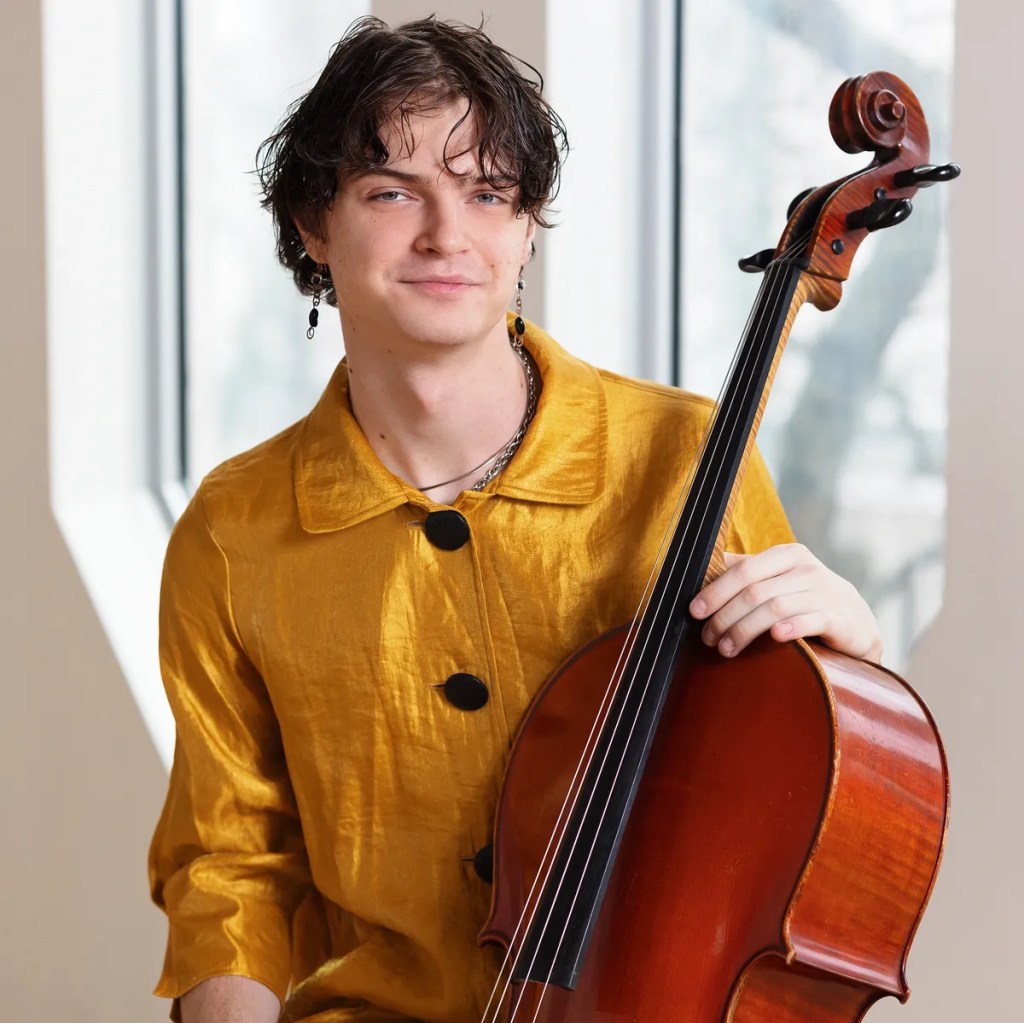
(Pictured: Drew Dansby.)
Drew Dansby, cello, Drew Dansby(he/him) is a recent double-degree graduate of Oberlin College and Conservatory, with degrees in cello performance under Darrett Adkins and chemistry with minors in Comparative American Studies and sociology. Drew joined the cello section of the Cincinnati Symphony Orchestra full-time beginning in the 2023-24 season, becoming the youngest member of the orchestra at 22. He has served as an acting cellist in the Charlotte Symphony, associate principal cellist of the New York String Orchestra, and principal cellist of the Verbier Festival Orchestra. Originally from Charlotte, NC, Drew made his solo debut with the Charlotte Symphony at age 15. Drew is also a founding member of the Charlotte Piano Trio, which has performed 14 concerts over 5 years across North Carolina, and was the founder and director of the 2022 Myers Park Summer Series. Drew has been recognized as a National YoungArts winner and gold medalist in the Cleveland Cello Society competition. Drew was a member of the National Youth Orchestra of the USA for three summers, including as a violinist in 2018 and as principal cellist in 2019, and he was the first member in the history of the orchestra to be accepted on two instruments. As a winner of Oberlin’s concerto competition, he performed David Baker’s Concerto for Cello and Jazz Band with the Oberlin Jazz Ensemble in April 2024.
And the rest of them are just as impressive in their achievements – so with the Poesis Quartet, we are getting a quadruple whammy of inspiration!
Maud: But the music? Will I be able to tolerate any of it?
Ethel: Listening to music of any era should not be centred on your pain threshold, honey. You may have to adjust your hearing aids and your expectations a bit, but the piece that won THE 2025 Banff Festival prize certainly didn’t scare those judges!
Maud: I didn’t know about that Banff Festival. Is it a big thing???
Ethel: A biggie, indeed. The Banff International String Quartet Competition was organized in 1983. It is now recognized as one of the world’s major string quartet competitions.
Ten quartets from around the world are selected to take part in the semi-final competition. All members of the quartets must be under the age of 35. After playing various styles of both traditional and modern chamber music before audiences over a period of several days, three finalist groups are chosen. After further performances, these are judged and a winner chosen.
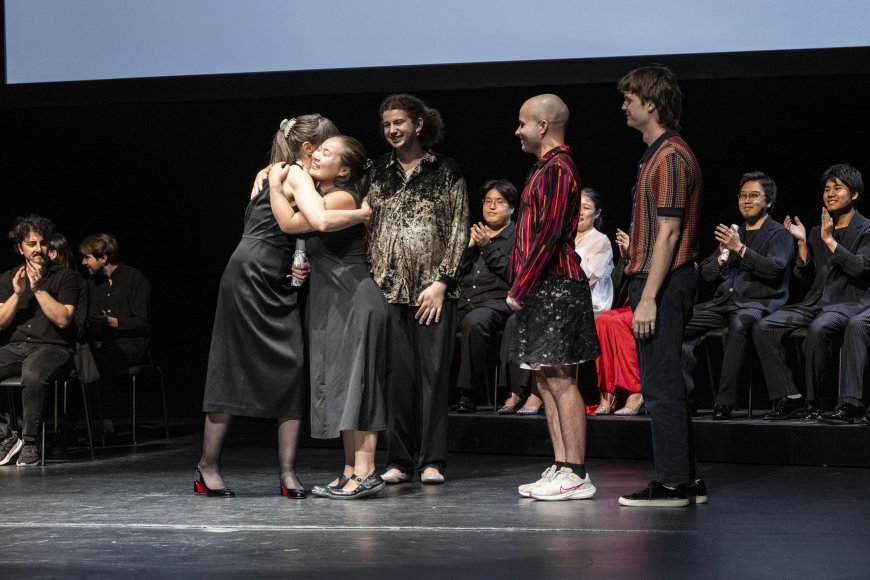
And here’s a photo of them receiving the 2025 Banff award.
As arts reporter Keith Powers said about the 2025 competition, “Each repertoire choice had a tell: of a quartet’s confidence, technique, history — all subtle, all different. For the Poiesis Quartet, this competition was not only a test of mettle, but it was also a forum for identity. The eventual competition winner cemented a place in the finals with a spectacular performance at the conclusion of the open competition: Bartók’s String Quartet No. 5 (the first work the group ever learned!). Then Poiesis stole the finals with royally inclusive and distinctive choices: quartets by Jerod Impichchaachaaha’ Tate, Brian Raphael Nabors, Ken Hisaishi, and Kevin Lau.
“The final round presents our ensemble, our values,” cellist Drew Dansby said. “We feel like everything we’ve done is being fulfilled with this.”
Want to hear the piece they played in the final round, Maud? Get ready …
Maud??? Maud??? Maud???
IF YOU GO:
What: The Jeffery Concerts presents the Poiesis Quartet
When: Friday, March 13, at 7:30pm.
Where: Metropolitan United Church, 468 Wellington Street, London, ON.
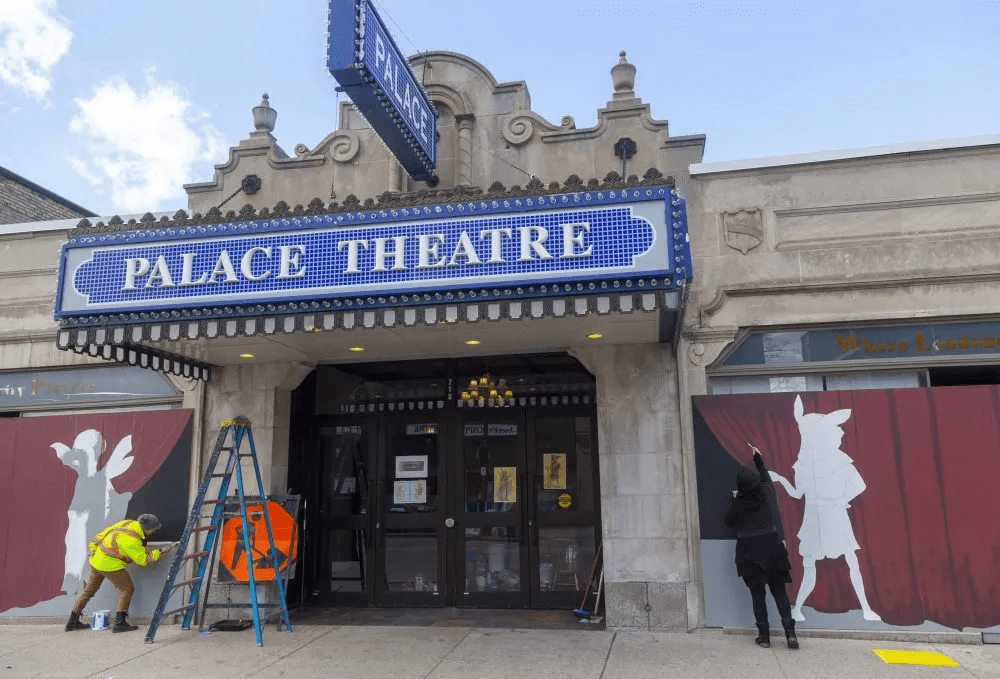
The Palace Theatre, constructed in 1929 as a venue for silent movies and designated by the City of London in 1991 for its historic or architectural value or interest, remains a focal point in London’s Old East Village for quality theatre. It is the home of London Community Players, London Youth Theatre Education & London Fringe.
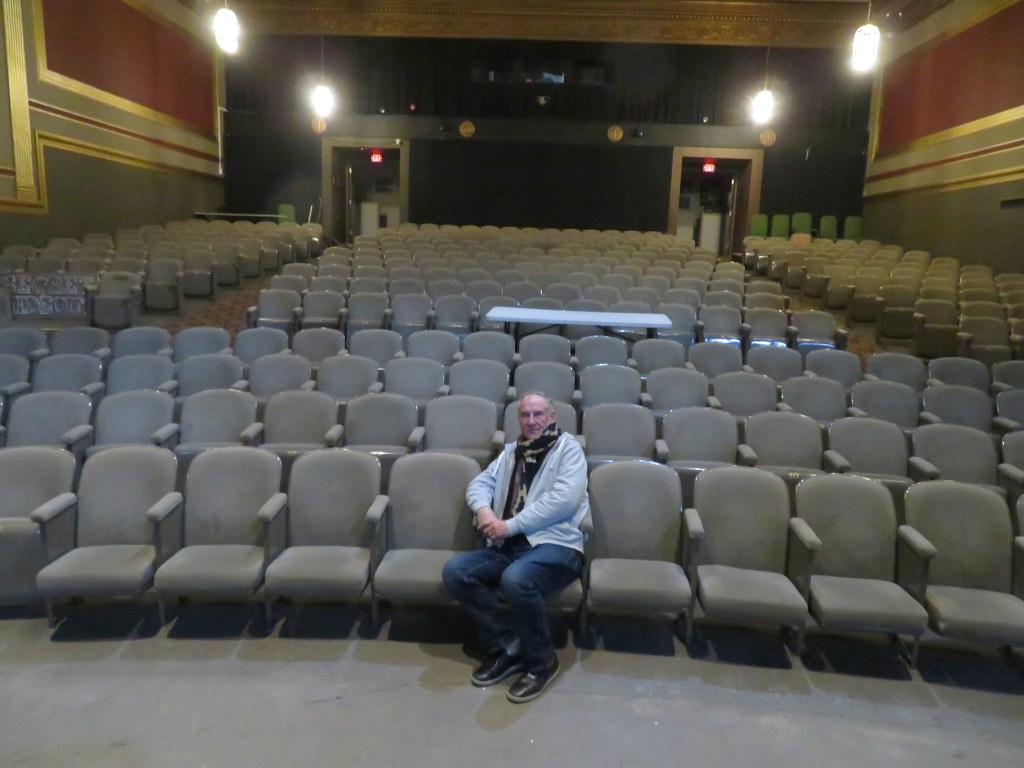
This historic venue is divided into two stages, the 75-seat Procunier Hall and the 350-seat David Long Stage.
Often, a stage is named after a beloved but deceased benefactor, actor, producer, or director. However, David Long is still with us, with a 47-year history associated with the London Community Players.
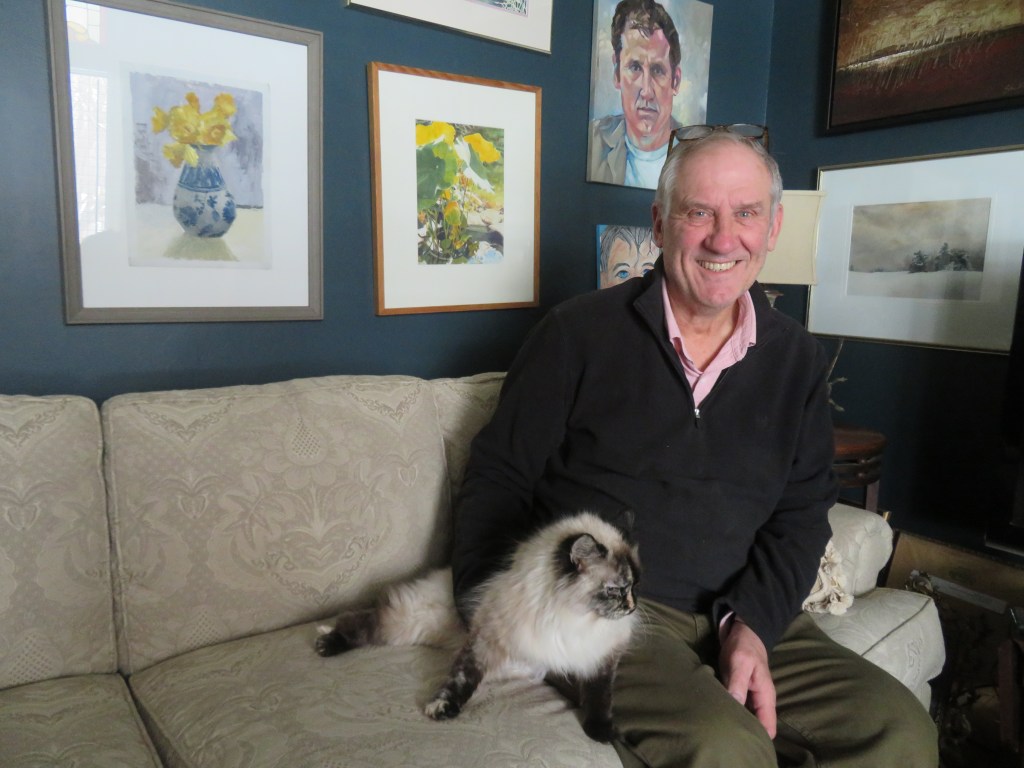
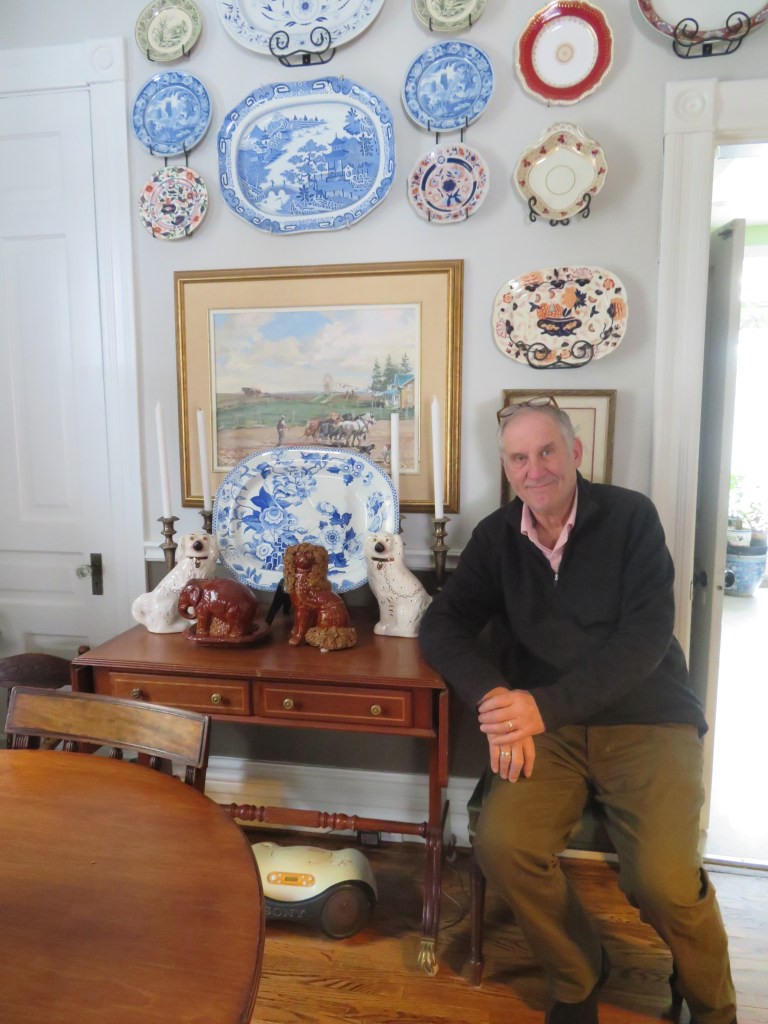
I recently met up with David at his home in East London. Over coffee and banana bread and surrounded by a lifetime’s collection of artwork and plates, we discussed the trajectory of his life.
(Pictured: David Long.)
The Long family’s ancestry in London dates back to 1850. At some point, according to David, family members “dispersed around the city.” David’s great-grandparents purchased land in the vicinity of Commissioners Road and Andover Drive. His father established Wood Lynn Farm Market, with various venues in the city. The Longs owned 300 acres of apples alone.
Wood Lynn Farms would become the first ‘pick your own’ orchard in Ontario. A pre-teen David was conscripted to wait at the gate and hand out a flyer to incoming customers, offering smiles as well as both prices and the ‘rules’ of the orchard. No overfilling, and there were trunk checks. At the time, a bushel of apples cost $1.50. This was long before ‘controlled atmosphere storage’ of apples, and so three generations of the Long family were involved during the narrow apple picking season, which would run from September into the Thanksgiving weekend of October. David proudly adds, “They were lined up on Oxford Street.”
David Long stayed true to his original neighbourhood, where his family home was established in 1935, just three houses from the Brick Cemetery. In 2010, ‘Friends of Brick Street Cemetery’ was established to provide guardianship to the eternal home of over 750 souls, and David Long got on board. The first burial occurred in 1813, 13 years before the City of London was established.
The organization researched the names of those under the soil and began repairing and re-erecting tombstones. According to David, “one third of the stones were on the ground, one third were leaning, and one third were still standing.” David was dubbed with the nickname ‘Jigsaw’ as it was his task to reassemble broken tombstones with both cement and epoxy. There was also the painstaking effort to clean the fronts of the stones without diminishing the lettering.
It was at York University in the 1970’s that David enrolled in a theatre program. . His desire to study theatre was built upon his drama experience in high school, which included a role in a production of the classic “Arsenic and Old Lace.”
But a year in university was enough, and he eventually returned to London after a bit of a tenure working in a paint store in Stratford.
It may or may not have been a synchronistic moment, but David’s return coincided with the beginnings of the London Community Players. He had invested a year’s worth of training in drama, and now a new theatre back home was opening.
The genesis of the London Community Players began with former members of ‘London Little Theatre’ as well as some passionate and earnest local actors. Productions began at the Gallery Theatre established at 36 York St. Their focus was Canadian-written plays, and 35 were performed between 1974 and 1978.
David leapt in and was cast in “Norman, Is That You?’ London’s first ‘gay’ play, a work David regards as a “bit of fluff,” but an important piece of theatre in recognizing and accepting London’s gay community. This was 1977, and London Free Press theatrical reviewer, Doug Bale, who could run roughshod over a local production, answered the question “Is London ready for gay plays?” with a resounding “Yes”.
David’s talents were also recognized in his ability to design and create sets. “My one grandfather built houses, and my other grandfather painted houses. I think I get my building skills from one and my painting skills from the other. The theatre discovered that I could build sets, and so that was the end of my acting career.”
As David was settling back into the theatre in his hometown, ‘HALO,’ the Homophile Association of London, Ontario, was establishing itself as a community club at Colbourne and Pall Mall streets. When David came out as a gay man in the late 70s, he had the support of his family, specifically from one of his grandfathers, who stated, “I knew people like that at Beal in the 1920s, and it didn’t bother me then, and it doesn’t bother me now”.
(Pictured: HALO Building, Colborne and Pall Mall Streets, London, ON.)
David eventually became president of the HALO club at a time of social intolerance of homosexuality. He was often the subject of homophobic slurs as he entered the front door, as well as dealing with vandalism in the form of broken windows, which were eventually boarded up. He recalls, “The music didn’t stop, and the dancing didn’t stop, so the club persevered and survived.”
This was a time when the former mayor of London, Diane Haskett, refused to proclaim ‘Gay Pride’ at City Hall as it was against her Christian values. She was eventually overruled by the Ontario Human Rights Tribunal, and the gay pride flag was flown over city hall. The HALO centre was the hub of the largest gay community in Canada, struggling yet surviving.
David recalls, “There were always lineups to get in. We had double-door security to protect our patrons. We always had Western (referring to the University of Western Ontario). The thing with the gay community at UWO was that everyone was here for four years. They would arrive, they came out, came to HALO, and they left when they graduated. There was always this kind of turnover.”
By the early 90s, within the gay community of London, HIV/AIDSwas creeping in. This disease was largely ignored by the media as well as American President Ronald Reagan. made its impact in London.
John Gordon was the first man in London to come out about his diagnosis of AIDS in South Western Ontario, and his death and legacy were the cornerstone of the creation in 1992 of the `John Gordon Home’, a Victorian-style residence on Dufferin Ave, which became a hospice. Tenants were cared for by a team of 30 volunteers (myself being one). The bedrooms of the building were remodelled, offering an individual design to each of the eight. David Long coordinated the renovation. He eventually found himself on the board of the John Gordon Home and was the representative of JGH to the Aids Committee of London. David knew the first residents, the first to arrive and the first to go to spirit.
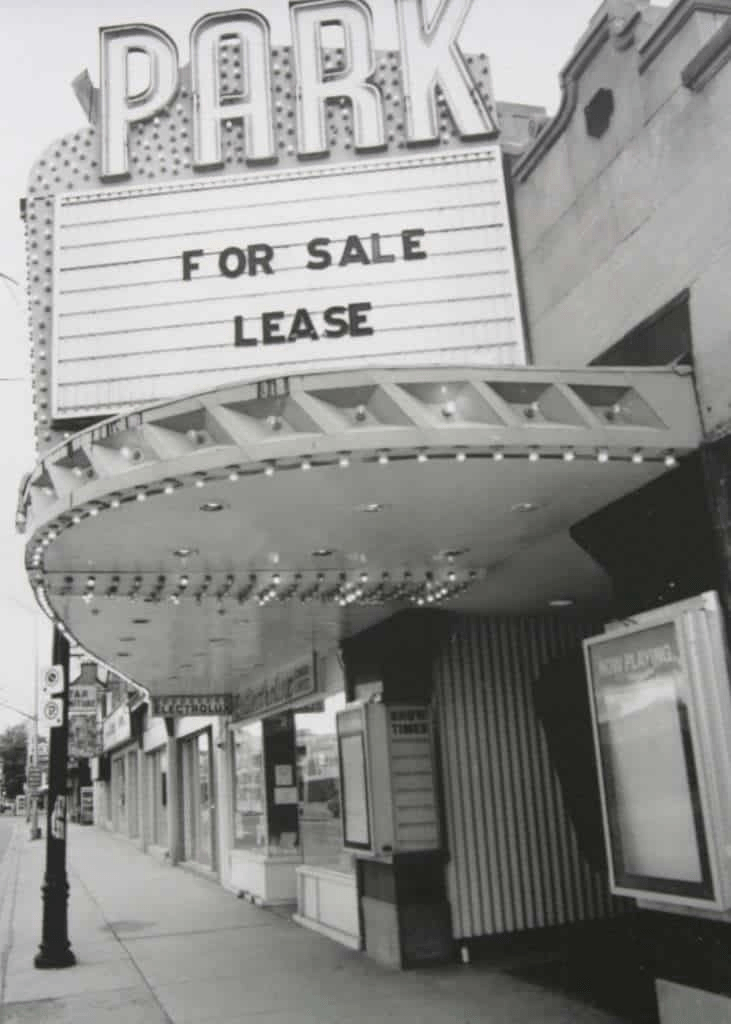
During the same period, the London Community Players were growing. With his long-standing work with the theatre, David became part of the Board of Directors. There was this notion to physically expand the theatre as it grew, but it was David Long who noticed the ‘For Sale’ sign at the Park Theatre in East London. There was an existing stage as well as seating for up to 400 people, and in short order, the deal was closed, and the Park Theatre was purchased in December of 1990.
Renovations happened quickly, with backstage areas including dressing rooms being constructed, with the first play opening in July of 1991.
David reflects. “Looking back over the years, some of the plays we have done there have been mind-boggling.’ He adds, “It is community theatre, but you balance the events. You have people who want the light entertainment, and you have people who want to be entertained, challenged, and educated.”
Now in its 51st season, The Palace Theatre continues to present engaging theatre to the London public. But community theatre has always had its challenges.
There is the issue of operating on tight budgets and high production costs. There is a reliance on volunteers, who may come and go. Casting actors has its own issues of scheduling conflicts as well as finding actors with the right skills. You also have to find a balance to produce safe and popular shows which guarantee the sale of tickets up against bringing in challenging and thought-provoking work. Every town and city which has a community theatre is always under this threat.
The Palace Theatre has had its share of added challenges. London has a homeless population of over 2000, and the 700 block of Dundas Steet as David Long calls it is ‘ground zero’ for the problem of homelessness. The plight of vagrancy in London carries the issues of addiction, mental health problems and vandalism, which directly affects the Palace Theatre.
Windows have been broken, as well as break-ins and theft. There is open drug use on the block, which is a deterrent to potential theatre goers.
Providing security is expensive, as hundreds of dollars are required to secure each production, protecting the building as well as safely ushering patrons in and out.
David adds, “The social services provided here are overwhelmed, and the foot patrol can only do so much,” adding, “Theatre used to be in the parks and on the streets, and we just can’t do that now.”
(Pictured: The Palace Theatre’s David Long.)
What is the future for Community Theatre?
“The future is challenging. There are theatre companies always closing down as they cannot adapt, change and survive. We need young people to get involved in theatre in multiple layers,” says David. He adds, “We used to sit and talk on breaks during rehearsals. Now everyone is on their phones. Cell phones are the worst invention which creates distractions from real communication.”
“There is this perception that we are an elite group of people. No, we are just trying to pay the rent and are open to any and all ideas for the stage. Give us something challenging, and we would love to do it. Let’s use Procunier Hall to do create something very ambitious.”
And what would be the ideal piece of theatre?
“Something in Procunier Hall, about 90 minutes long with no intermissions, no breaks, and no lapses with the actors and their connection to the audience”.
He slyly adds, “We shut the door for 90 minutes, and you can’t get out.”
David’s lifelong commitment to Community Theatre is reflected not only in the productions selected for the stage but also in the sets he thoughtfully designed and created. The David Long Stage that proudly bears his name stands as a fitting and enduring tribute to his dedication, creativity, and lasting impact.
J. Bruce Parker is a retired oncology nurse. As an avid cyclist, he crossed the country by bicycle in 1991 and still explores Ontario’s north via canoe trips. He has published a short story based on his camping experiences.
For over 20 years, as a citizen scientist, he was involved with Monarch Watch, an organization that monitors the annual migration of the Monarch butterfly. He has written about this species and other articles on nature for The Cardinal, Nature London’s quarterly magazine.
(Cast and Crew of Harris Cashes Out! Photo by Ross Davidson.)
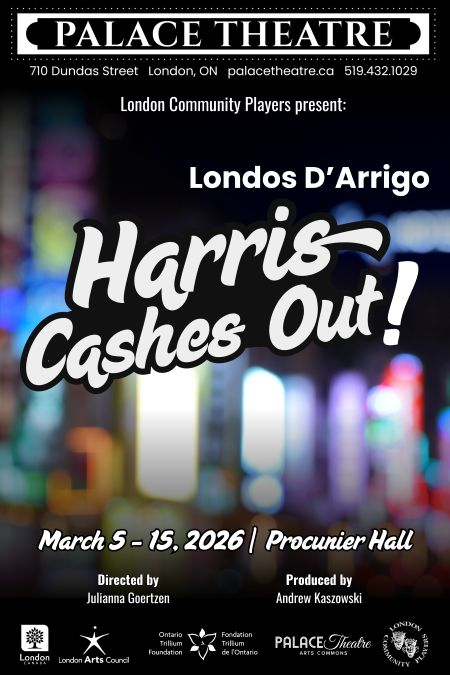
In the intimate black box setting of Procunier Hall at the Palace Theatre, Harris Cashes Out offers a light comedy with a bittersweet premise and a few strong performances. Written by playwright Londos D’Arrigo and directed by Julianna Goertzen, the play centres on Harris Wellborn, a once-hopeful composer and writer whose brush with theatrical success came – and went – decades ago. Forty years after a musical of his closed almost as soon as it opened, Harris now scrapes by in a run-down apartment, relying on the reluctant generosity of his domineering sister, Maggie. His quiet existence is disrupted when Maggie enlists the help of an eccentric neighbour, Kim, and her scheming boyfriend sees an opportunity to profit from Harris’s long-ago brush with fame.
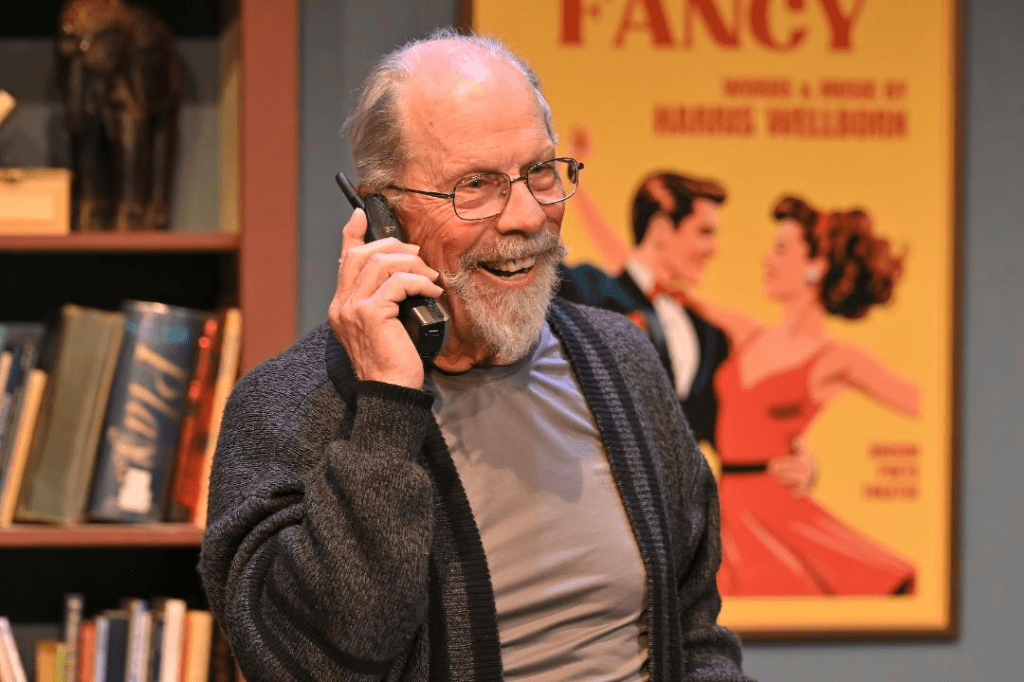
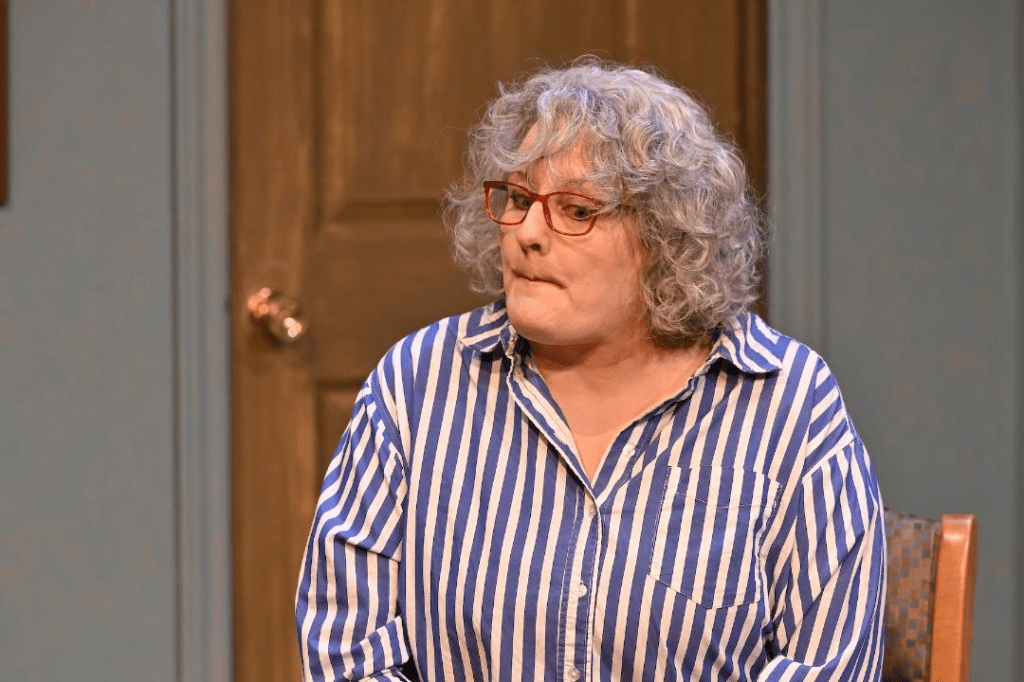
(Pictured: Tim Bourgard as Harris Wellborn. Photo: Ross Davidson.)
Tim Bourgard brings a grounded presence to the titular character, Harris. His performance leans quite comfortably into the character’s weary charm, and his comedic timing often lands well with the audience. Bourgard creates a believable portrait of a man who has spent years lingering with his thoughts of what might have been and pining for a time gone by.
(Jasmine Gunkel as Kim Sutton. Photo: Ross Davidson.)
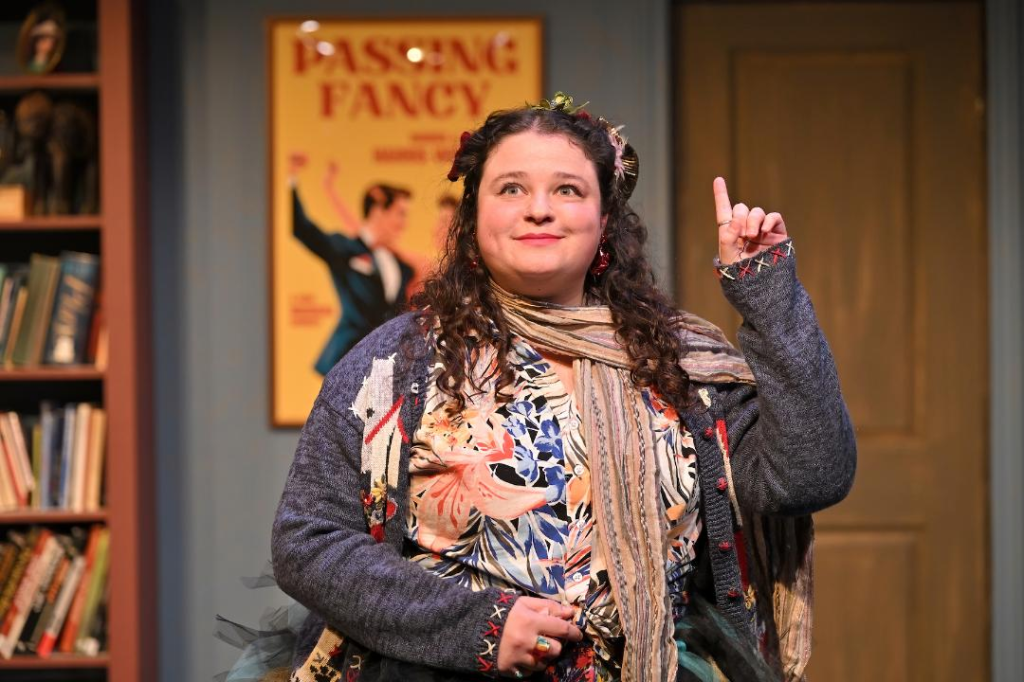
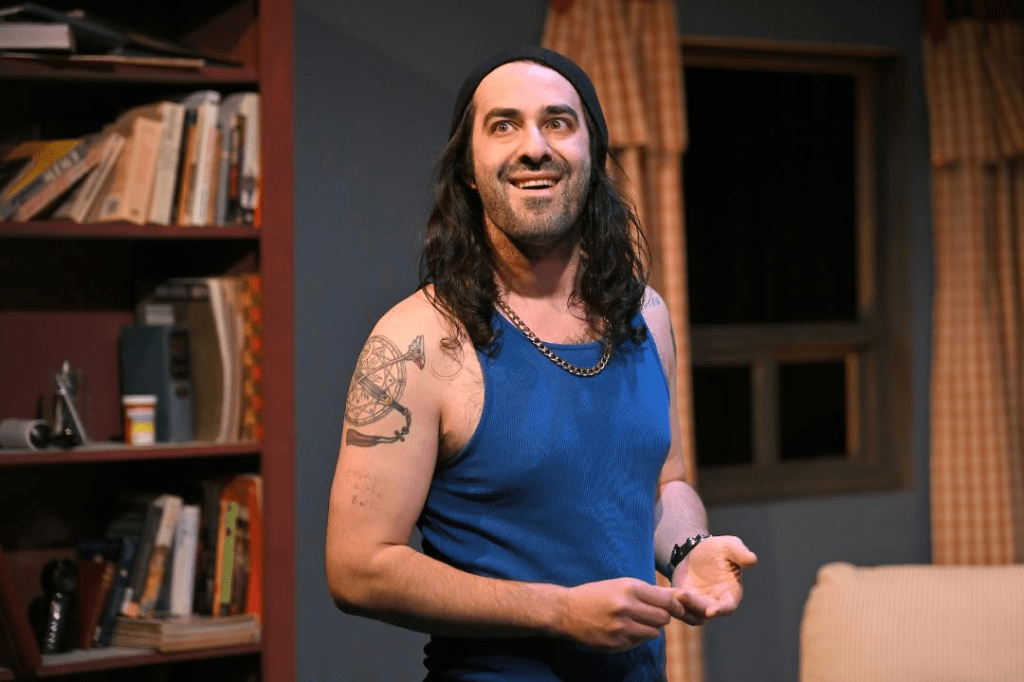
Jasmine Gunkel as the eccentric neighbour, Kim, and Vivien King-Sherwood as the meddling sister, Maggie, each give commendable performances. But the standout performance of the evening comes from Sam Didi as Jason, whose energy and sharp delivery help elevate several scenes. Whenever Jason enters the stage, the rhythm of the show noticeably tightens, providing some of the play’s most engaging moments.
(Pictured: Sam Didi as Jason Sernach. Photo: Ross Davidson.)
And while the cast performs well together overall, occasionally the chemistry and pacing felt inconsistent. At times, the production struggled to maintain momentum, particularly during a few awkward scene transitions that momentarily disrupted the flow of the story. Scene continuity in those awkward moments would improve with music or lighting.
(Pictured: Vivien King-Sherwood as Maggie Bellows. Photo: Ross Davdson.)
Technically, the production suits the scale of Procunier Hall’s black box space. The costuming is particularly effective, helping define the characters clearly without overwhelming the intimate setting. The simplicity works in the show’s favour and keeps the focus squarely on the actors and the dialogue.
One of the evening’s highlights came before the show even began: the playwright himself was in attendance, a treat that added a special sense of occasion for the audience.
(Pictured: Playwright Londos D’Arrigo.)
While Harris Cashes Out! delivers some enjoyable comedic moments and a few memorable performances, the script itself feels uneven. The play builds toward a resolution that ultimately lands somewhat softly, leaving the ending feeling less satisfying than the setup might promise. Still, there is charm in this small-scale production. It may not be a show that completely wows you or wins you over, but it offers an evening of theatre with enough humour and heart to make the experience worthwhile—even if it never quite cashes in on its full potential.
IF YOU GO:
What: Harris Cashes Out by Londos D’Arrigo, Directed by Julianna Goertzen
Where: Procunier Hall at the Palace Theatre, 710 Dundas St, London, Ontario
(Pictured: Designer’s rendition of exterior Westland Gallery façade. Photo courtesy of Al Stewart.)
Westland Gallery has settled into its new/old location at 247 Wortley Road. The site, once known as The Art Exchange and then Westland South, has been rechristened Westland Gallery. While the new sign has yet to go up, the old one has come down.
Located in Wortley Village, Westland Gallery offers original artwork by Canadian artists from within Ontario and mounts a new show every four to five weeks. Westland has twice been voted best art gallery in London, and this year, it won a People’s Choice Award for favourite businesses in Wortley Village.
Westland Gallery came into being when, in 2007, Al Stewart’s friend Eugene Lamont asked him to be the “caretaker,” so to speak, of the latter’s historic building at 156 Wortley Road. It was just a few blocks north of Stewart’s original business, The Art Exchange.
For the next four years, the two shared the building; Lamont continued selling antiques, and Stewart began selling art at the second location.
Finally, in 2013, Westland Gallery was born. While Stewart made extensive renovations, he remained true to the building’s history.
Built in 1886, the building had housed a painting and decorating store called Westland, two pharmacies, and an antique store. The last two were owned and run by Lamont.
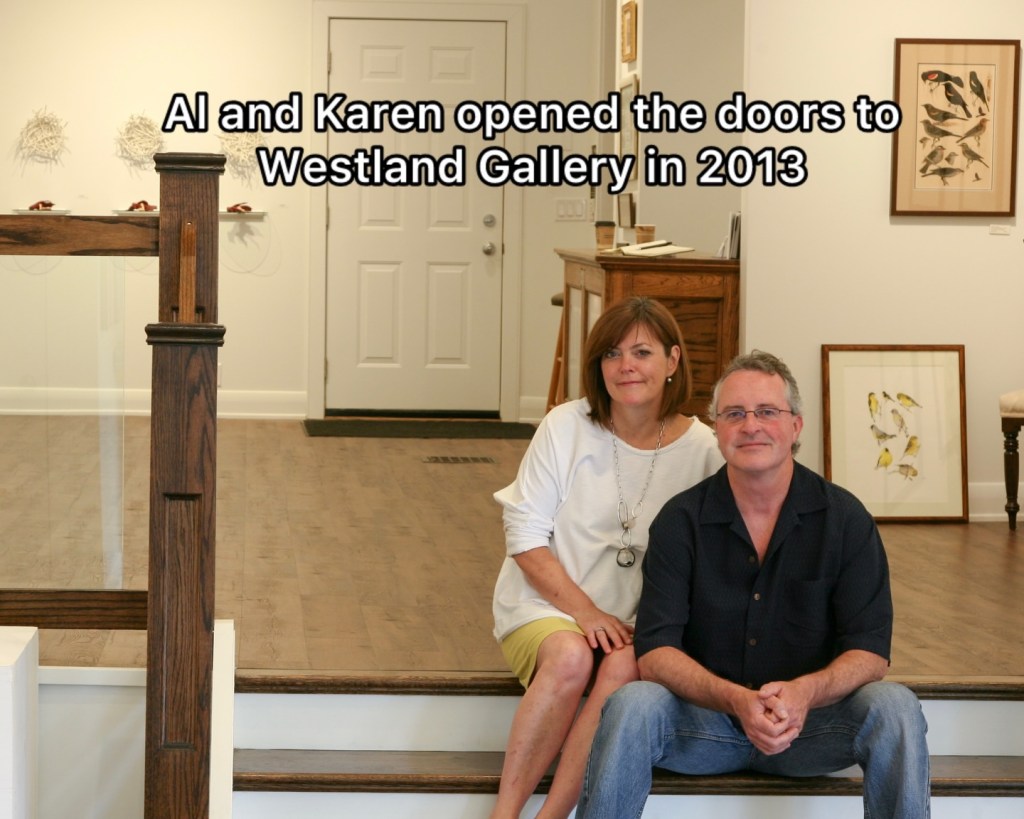
(Pictured: Westland Gallery proprietors, Karen and Al Stewart.)
Prompted by their 65th birthdays in 2025, Westland Gallery owners Al and Karen Stewart decided it was time to “dial things back.” Al Stewart says, “This is what we needed to do for ourselves at this time.”
While they were ready to let the building go, they sought a buyer who would continue to celebrate Lamont’s legacy.
Al Stewart says, “We have taken care of her, and now it is time to let someone else have the honour.”
Now, in a best-case scenario, the old building has been sold to Purdy Naturals, a storefront business that fits well into the fabric of Wortley Village.
Although the location of Westland Gallery has changed, the quality and service haven’t. Westland Gallery will still deliver exceptional artworks in a range of styles and mediums, as well as services such as art consultation and secure international shipping.
While they will miss the old building, the Stewarts are excited to have a home-based business once again.
(Photo: Courtesy of Al Stewart.)
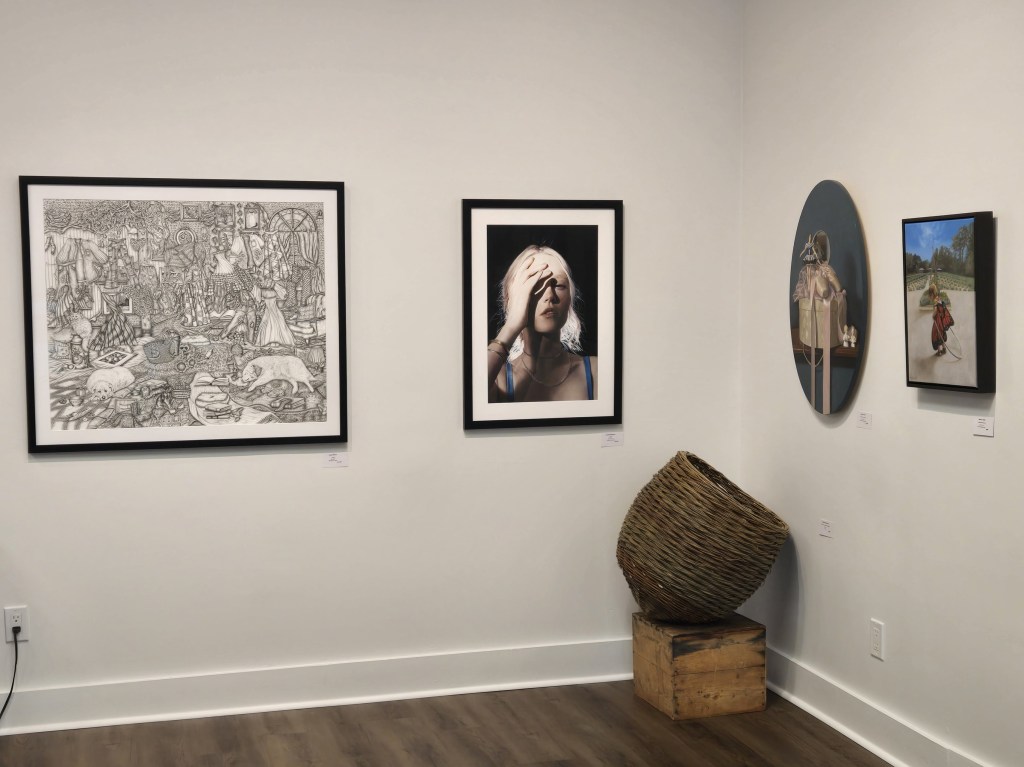
Extensive renovations have been done to 247 Wortley Road, and more are planned. Shelving has been removed. New flooring has been installed from the front of the gallery through to the back of the Stewart’s living space to create greater continuity.
(Photo: Courtesy of Al Stewart.)
The “new” location is more compressed, but Al Stewart is rising to the challenge and making use of every inch. There is less storage space, which will necessitate a faster turnover of overstock and greater website presence.
He sees it as an opportunity to put the fun back into selling art.
(Photo: Courtesy of Al Stewart.)
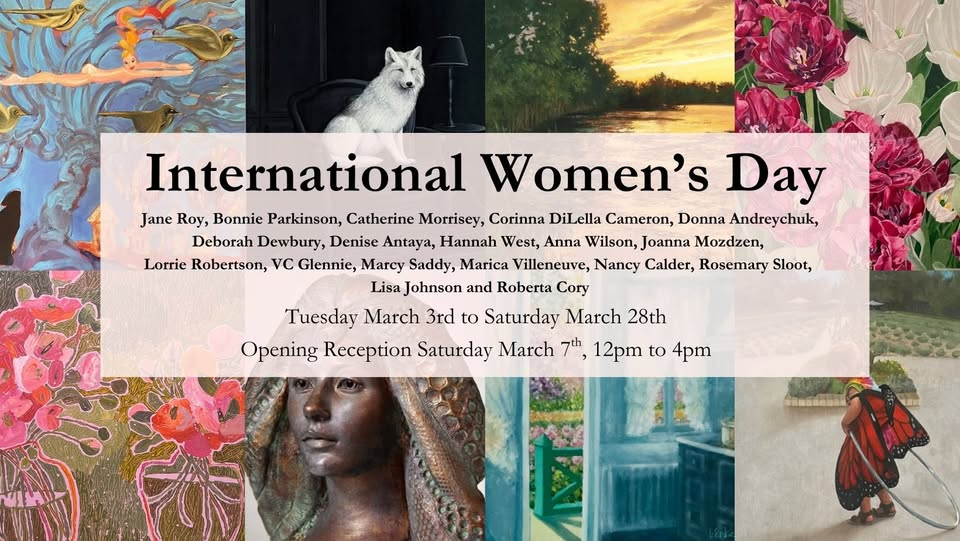
Westland Gallery’s inaugural exhibition, “International Women’s Day”, runs from March 3 to March 28, 2026 and celebrates the work of 19 female artists. The opening reception is Saturday, March 7, from 1pm to 3pm.
(VC Glennie, “Goldfinch,” oil on wood panel, 16 x 40 inches.)
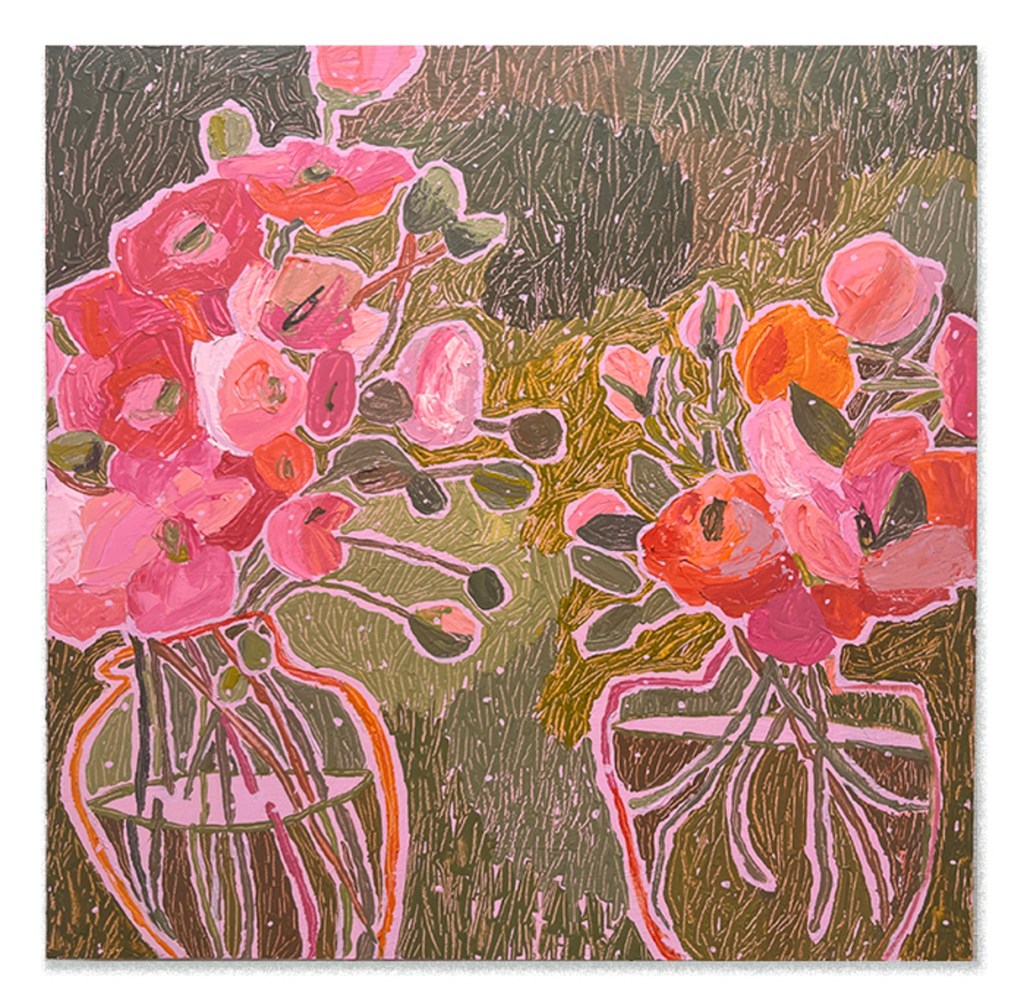
(Marcy Saddy, “Janie Jones,” acrylic on cradled board, 20 by 20 inches.)
(Donna Andreychuk, “Falling Down”, oil on canvas, 40 by 40 inches.)
This is followed by “Pat Gibson and Nancy Moore” from March 31 to April 25, 2026, and the annual floral exhibition “Moms and Mums” from April 28 to May 23, 2026.
Westland Gallery hours are Tuesday through Friday, 10am to 5:30pm, and Saturday, 10am to 4pm. For more information, visit: https://westlandgallery.ca/
By Beth Stewart
Beth Stewart is a writer, educator, and visual artist. She has a B.A. and a B.Ed. from the University of Windsor and a Diploma in Art Therapy from Western University. Beth has worked as an Art Therapist with Canadian war veterans and as a Secondary School Teacher of art and English for the TVDSB. She retired in 2024.
Beth was the arts editor at Scene Magazine from 2004 to 2006. She founded Artscape Magazine in 2006 and served as its editor until 2008. In addition, Beth wrote on the arts for Lifestyle Magazine from 2006 to 2017 and served as the copy editor for The Beat (in print) from 2009 to 2013.
As a visual artist, Beth works mainly in dry media and favours coloured pencil. Over the past decade, Beth’s focus has been on wild and domestic birds. Beth is a member of the Coloured Pencil Society of America, the Gallery Painting Group, the Eclectic Collage Collective, the Lambeth Art Association, and a founding member of the Coloured Pencil Artists of Canada group.
Walking into Mrs. Krishnan’s Party at The Grand Theatre’s Auburn Stage, I had no idea what to expect.
After being handed a piece of paper captioned “Wallflower,” I was greeted by a vibrantly clothed man, grinning from ear to ear, welcoming audience members and directing us to our seats.
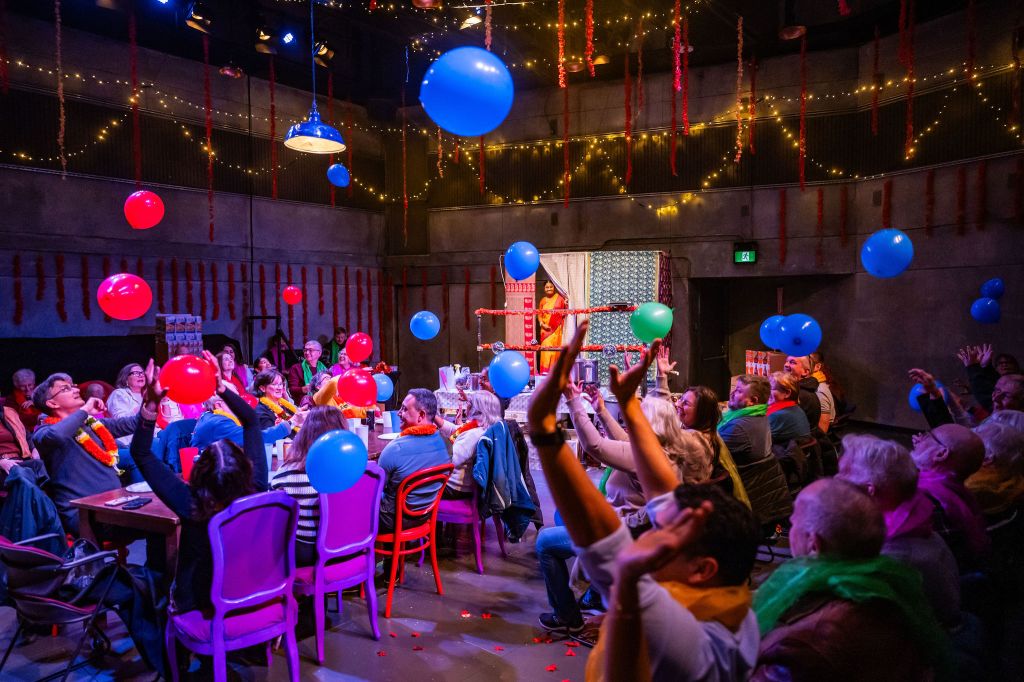
Inside the theatre, chairs were set up around the perimeter of the room, all facing inwards to a table with a single countertop burner in the centre, and a platform draped in patterned sheets stood toward the back, where actors could enter and exit. Hanging from the ceiling and around the walls were garlands of red flowers, and boxes, presumably containing inventory overflowing from Mrs. Krishnan’s shop, gathered around the edges of the room.
From the stage set up alone, I knew this wasn’t going to be a typical performance – and I was right.
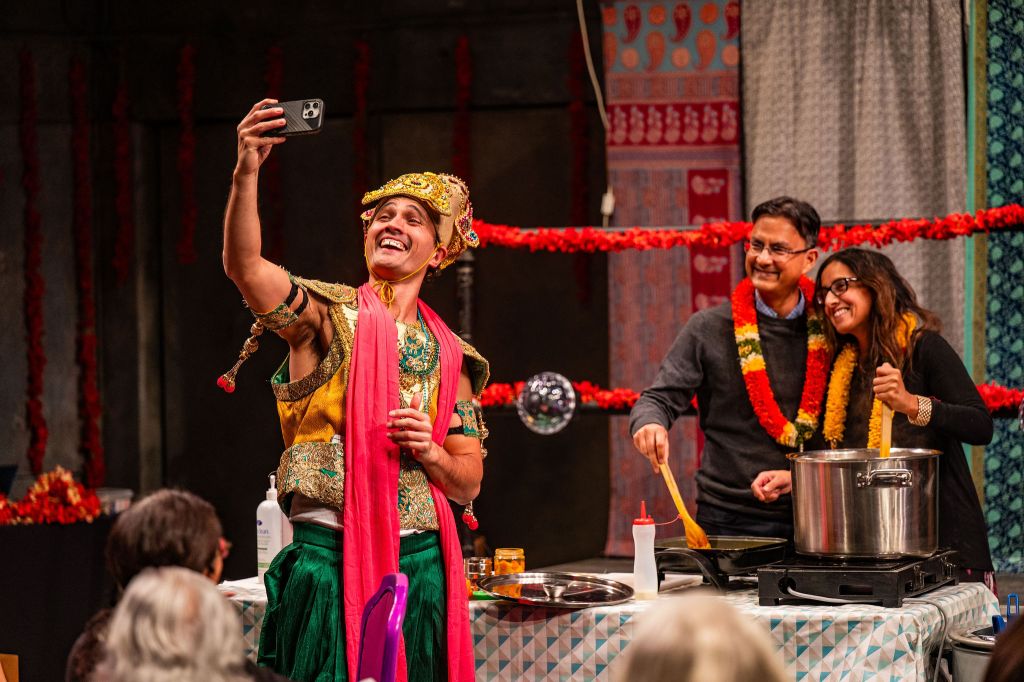
To start the show was the same colourfully dressed man from earlier, played by Justin Rogers, performing as James (or self-proclaimed DJ Jimmy J), Mrs. Krishnan’s boisterous and energetic boarder.
(Pictured: Justin Rogers as DJ Jimmy J and audience members. Photo: Dahlia Katz.)
He explained to the audience that it was a day of celebration and that we were invited to join in the festivities of the annual Hindu harvest festival, Onam. The catch? Mrs. Krishnan doesn’t know that all 100+ of us are in the back of her shop and ready for a party.
Within minutes, James had brightly coloured scarves passed around for every audience member to wear, quickly painting the room in vibrant oranges, yellows, greens and pinks. He then began to play loud, energetic music, inviting people to clap, get on their feet, put their hands in the air and start the party.
It dawned on me like the sun that I had unknowingly placed myself at the epicentre of internal conflict for every introverted arts lover: interactive theatre.
Safe to say, as an introvert, I was terrified of what I had just gotten myself into. On the other hand, as a theatre fan with a job to accomplish, I knew what I had to do, and so, despite my natural aversion to high-intensity social settings, I swallowed my fear and surrendered.
The story is set into motion by the eponymous Mrs. Krishnan, an Indian immigrant mother and widow who runs Krishnan’s Dairy, and awaits her son’s return home to celebrate Onam, played by Kalyani Nagarajan. She makes her entrance with a literal bang, as she stumbles in the dark offstage after James turns the lights off in an attempt to surprise her with the abundance of strangers gathered in the backroom of her shop.
(Pictured: Kalyani Nagarajan as Mrs. Krishnan. Photo: Ankita Singh.)
After the audience yells “surprise!” Mrs. Krishnan is in serious shock at the sight of all of us, appearing timid, reserved and mildly furious with her boarder. While her strict, regimented demeanour remains present throughout much of the show, it isn’t long before her quirky, unapologetic and playful side begins to emerge as she grows more comfortable with the visitors in her shop.
A key component of this performance is its reliance on audience interaction. Both Rogers and Nagarajan constantly defer to the audience to decorate the unfolding story, and at times even invite them on stage to assist in cooking the Dahl for the party. Among these audience members of my show were Tom, a six-foot-four man who took it upon himself to help Mrs. Krishnan open the canned tomatoes — prompting her to repeatedly complain that James should be more like him — Kevin from the back row, whose name resulted in loud cries of “KEVIN!” from Mrs. Krishnan in a playful Home Alone reference and, my personal favourite, the little boy sweeping the fallen rice off the floor while laughing at every moment.
While I knew this was a theatre performance, at times it felt more like watching a stand-up comedy set from performers who had mastered the art of crowd work, effortlessly rolling with every joke and unexpected moment. What made it even more unique was the knowledge that no two performances would ever unfold in quite the same way.
As artistic director of The Grand, Rachel Peake explains, “Immersive theatre removes the division between audience and stage — calling on the audience to meet the experience with all five senses, and clearly articulating that each performance is unique, influenced by the particular confluence of people on any given day.”
(Pictured: Rachel Peake, Artistic Director, The Grand Theatre.)
The constant humour present throughout the performance also made the more serious moments land with greater weight by contrast. I appreciated that the story allowed for its characters to be more than simply funny, revealing them as people searching for meaning in a world where happiness is not always easy to find.
This becomes even more layered when the reality of cultural displacement is considered, making Mrs. Krishnan representative of more than just herself.
In an interview with me after the performance, Nagarajan explained, “She is every migrant struggling to find their place in their community, battling with her son, battling with this idea of duty versus choice and freedom…I think that’s why a lot of the Indian community here identifies with her. They go like, ‘I know who that person is, and I want to call my mum,’ or ‘I am that mum.’”
Once the show concluded, to celebrate the party and the community forged over the last 80 minutes, the actors served the dahl made throughout the performance to the audience.
In the end, as apprehensive as I was in the beginning, I’m glad I stayed to feel part of a performance meant to bring people of different backgrounds together in a shared celebration. Saturated in humour, doused in conflict, and marinated in community, Mrs. Krishnan’s Party was a reminder that even in the midst of chaos, we can choose to celebrate anyway.
What: The Grand Theatre presents Mrs. Krishnan’s Party.
When: February 25 – March 7, 2026.
March 5, 2026 | 7:30pm
March 6, 2026 | 8:00pm
March 7, 2026 | 2:00pm
March 7, 2026 | 8:00pm
Where: Grand Theatre, 471 Richmond Street, London, ON.
Tickets: Tickets can be purchased online at grandtheatre.com, by phoning the Box Office at 519.672.8800, or by visiting the Box Office in person at 471 Richmond Street (weekdays from 9:00 a.m. to 5:00 p.m., and Saturdays from 11:00 a.m. to 3:00 p.m.).
Reviewed by Charlotte MacDonald
Charlotte MacDonald is a Creative Writing and History student at Western University. She currently writes about theatre, pop culture, and campus life for The Western Gazette, works as a Digital Intern at The Walrus, and hosts a radio show at Radio Western. Growing up in Toronto, theatre has always been a staple part of Charlotte’s life, and she has come to greatly enjoy engaging and contributing to the theatre community through her writing.
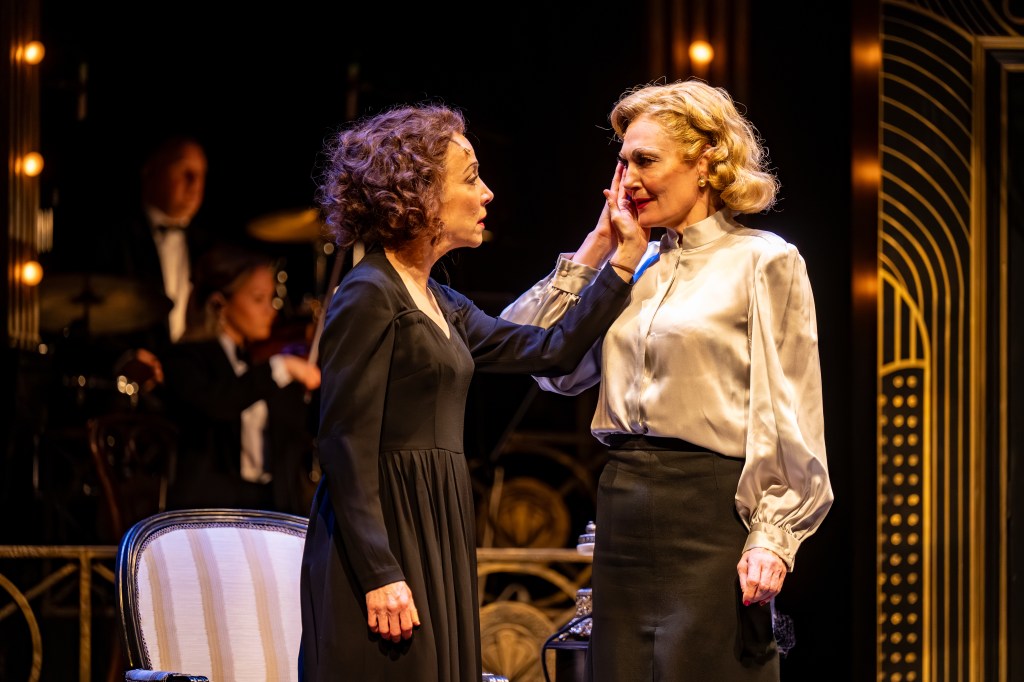
(Pictured: Deborah Hay as Edith Piaf and Terra C. MacLeod as Marlene Dietrich. Photo: Dahlia Katz.)
Two singers born fifteen years and 1,000 kilometres apart walk into the same dressing room in New York. The result? A friendship that transcends history.
Set in 1948, in the glittering post-war world of New York’s international stage, The Grand Theatre’s Production of Piaf/Dietrich follows the unlikely and enduring friendship that formed between French chanteuse Édith Piaf and German screen legend Marlene Dietrich.
While the glamour and star power of Hollywood’s golden era tend to fascinate many, Piaf/Dietrich pulls back the velvet curtain and invites the audience backstage to discover who these legendary women were when the spotlight faded.
The performance opens with Marlene Dietrich, played by Terra C. MacLeod, back in Germany for the first time in 30 years after resisting Hitler and his regime, preparing for a show in her dressing room. Sixty kilometres away, Édith Piaf, played by Deborah Hay, is also preparing for a performance of her own. When each woman’s name is mentioned to the other, it quickly becomes clear that something between them has gone sour as both wince at the mere sound of the other’s name.
As they step onto their respective stages, only a few towns apart, they both begin to sing La Vie en Rose. Édith performs drunkenly while Marlene faces hecklers, and both begin to falter. This parallel performance signals a palpable link connecting the two women’s lives, leaving the audience to wonder: what happened?
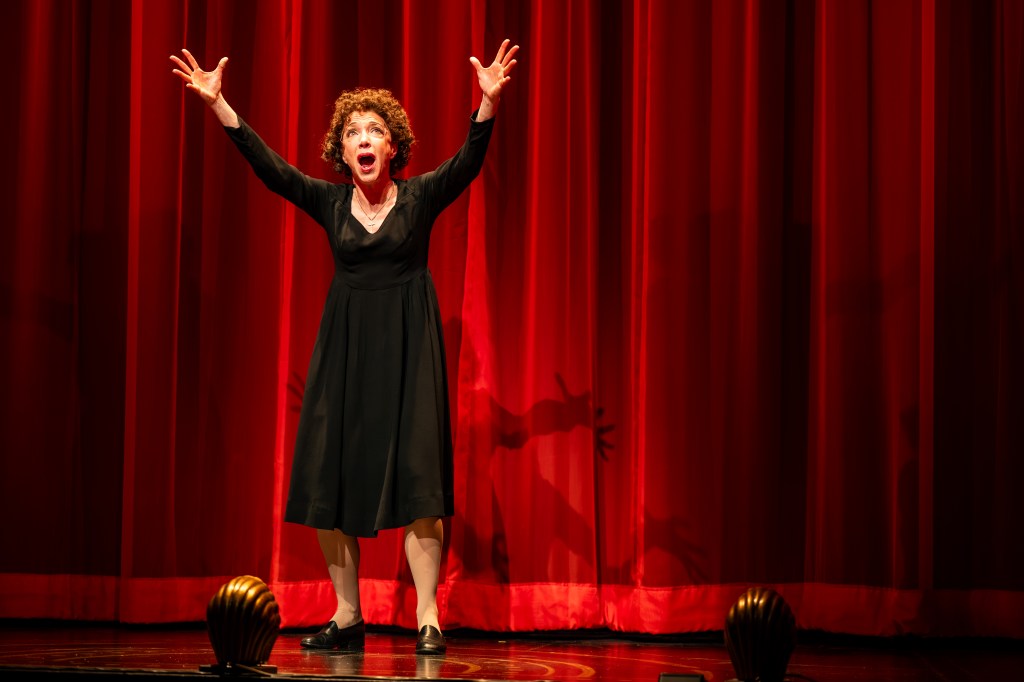
(Pictured: Deborah Hay as Edith Piaf. Photo: Dahlia Katz.)
Before we find out, the story takes us back to the beginning.
Originally titled Spatz und Engel (The Angel and the Sparrow), the show was co-written by German author and director Daniel Große Boymann and Austrian playwright Thomas Kahry. It premiered in Vienna in 2013, where it ran for six seasons before touring Germany, Switzerland, and Czechoslovakia. The production was later translated by Sam Madwar and adapted by Canadian playwright Erin Shields.
After the story jumped back in time through a seamless transition, the stark contrast in Hay’s performance as Piaf is immediately striking. The fragile, exhausted singer struggling through her performance transforms into a youthful, giddy young woman, still untouched by fame. This younger Edith feels worlds away from the woman we saw only moments earlier, demonstrating Hay’s range and setting the stage for the story that will eventually bring us back to that moment.
When Marlene returns to the stage, singing “Boys in the Backroom,” Edith remains in the background, starstruck, listening to the song on the radio. MacLeod’s portrayal of Marlene is strong, confident and charming, moving through her numbers with a kind of grace and ease that only a seasoned entertainer could. This layered approach to staging and dialogue continues throughout the production, creating a sense of immersion that felt almost cinematic.
(Pictured: Terra C. MacLeod as Marlene Dietrich. Photo: Dahlia Katz.)
The atmosphere throughout the show was further supported by lines of marquee lights framing the set and a live band in suits positioned on either side of the stage, reminiscent of a vintage cabaret. This constant presence on stage suggested that even in moments away from performing, that world lingered in the background, inseparable from who these women were.
One of the most naturally compelling elements of this story is the instant and profound bond that is formed between the two protagonists, despite how differently they appear in the world. Marlene is glamorous, poised and relentlessly professional, carrying a quiet sadness she would never let anyone see, whereas Édith is unapologetically emotional, sometimes volatile and blessed with a fiery passion capable of setting any stage ablaze.
“Often, we are drawn by our own admiration of that which we ourselves are not. It is in this mix that our story emerges,” says the show’s director and The Grand’s artistic director, Rachel Peake.
(Pictured: Rachel Peake, director of Piaf/Dietrich, and Grand Theatre Artistic Director.)
Beneath the glamour of show business that surrounds this production is a story unafraid to confront the difficult moments that shaped these women’s lives. Exploring real themes of substance abuse, regret, fear, and loss, the narrative moves beyond entertainment into something unmistakably intimate.
For any theatre lover, and sometimes even for those who are not, finding yourself suddenly brimming with emotion at the simplest of moments is hardly unfamiliar. A twinkle in a chanteuse’s eye as she looks out at a devoted audience, or an actor’s moment of complete surrender to their character, can be enough to crack open even the most tightly guarded heart.
In Piaf/Dietrich, the performers did more than simply act with raw intensity; they seemed to fully embody their characters, connecting with the untouchable age of days gone by, dazzling the audience into misty-eyed awe as the performance unfolded before them.
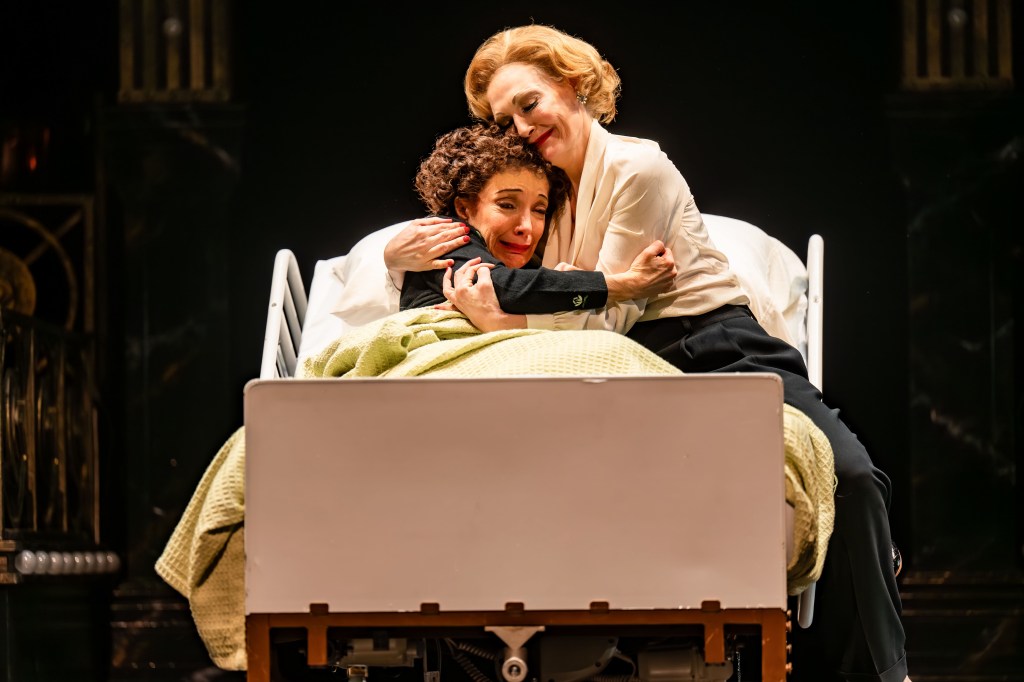
(Pictured: Deborah Hay as Edith Piaf and Terra C. MacLeod as Marlene Dietrich. Photo: Dahlia Katz.)
At one point in the performance, as Hay was singing Mon Dieu, I closed my eyes and pretended Édith Piaf herself had been reincarnated and was serenading me. As it turns out, the man sitting beside me had done the same thing. While Édith Piaf may live only in old vinyl records and Spotify playlists, it felt like a privilege to come as close as this to hearing her alive again.
So, if you’re still wondering how I felt about going to see Piaf/Dietrich at The Grand Theatre, in the words of French chanteuse Édith Piaf — Non, je ne regrette rien.
IF YOU GO:
What: The Grand Theatre presents Piaf/Dietrich: A Legendary Affair.
When: February 17 – March 7, 2026.
March 4, 2026 | 1:00pm
March 4, 2026 | 7:30pm
March 5, 2026 | 7:30pm
March 6, 2026 | 8:00pm
March 7, 2026 | 2:00pm
March 7, 2026 | 8:00pm
Where: Grand Theatre, 471 Richmond Street, London, ON.
Tickets: Tickets can be purchased online at grandtheatre.com, by phoning the Box Office at 519.672.8800, or by visiting the Box Office in person at 471 Richmond Street (weekdays from 9:00 a.m. to 5:00 p.m., and Saturdays from 11:00 a.m. to 3:00 p.m.).
Reviewed by Charlotte MacDonald
Charlotte MacDonald is a Creative Writing and History student at Western University. She currently writes about theatre, pop culture, and campus life for The Western Gazette, works as a Digital Intern at The Walrus, and hosts a radio show at Radio Western. Growing up in Toronto, theatre has always been a staple part of Charlotte’s life, and she has come to greatly enjoy engaging and contributing to the theatre community through her writing.
Here is the poster for Thursday night’s Magisterra Concert. So, you already know lots about it- but I’ll tell you more!!!
First, though, I’m going to come clean about what may keep people from flocking to some exquisite chamber music- and in THIS city, that is one opportunity among a flood of riches.
It’s PARKING, isn’t it???
Almost sixty years ago, when we came to London, I was vaguely amused by the horrified mentions of PARKING in the city- the warnings about downtown dying if those malls were built in the suburbs offering free space for cars. And now- I’ve also become the kind of Aged Karen who would hurl epithets at City Council from the gallery, bewailing what I must pay to park my Mazda close to the classical music event I want to attend.
I’m going to offer a few suggestions for the similarly enraged:
Point your car to Fullarton St. between Talbot and Ridout. Use the street- it’s after 6:00 p.m. and barely a block from Museum London
Make an evening of it. Yaya’s Café has replaced the Rhino- and offers an intriguing Thursday night African meal until 7:00 p.m.
Ask someone under 40 in your home about Uber. I watched the young’uns in my extended family use it all over Boston, Detroit, Toronto … and their summoning and paying for the service did not seem to impoverish them.
So, what else do you need to know?
Piano trios? Three pianos on that small auditorium stage?
Au contraire, mon frere… as famous poet George Carlin used to say.
A piano trio is a small chamber group of three musicians – piano, violin, and cello – playing together as equal musical partners. In a piano trio, each instrument has its own voice: the piano provides richness and colour, the violin often sings the melody, and the cello adds depth and warmth. Composers have admitted they love writing for piano trio because this intimate setting lets listeners hear every musical “voice” clearly, like three characters in a vivid, wordless conversation.
And the ones chosen for Thursday night are masterpieces:
Beethoven’s Piano Trio in E‑flat major is an early piece from his “new kid in town” years in Vienna. It’s bright and energetic, with clear tunes that bounce quickly between piano, violin, and cello, plus a gentle, slow movement and a witty, fast finish.
Brahms’s Piano Trio in B major is big, warm, and emotional. It opens with a long, singing melody, then moves through music that can feel stormy one moment and comforting the next, always with rich, lush harmonies.
Turina’s Piano Trio No. 2 is a short, colourful work with a strong Spanish flavour. In just three movements, it shifts between dreamy, atmospheric writing and lively, dance‑like rhythms that give the trio a vivid, distinctive character.
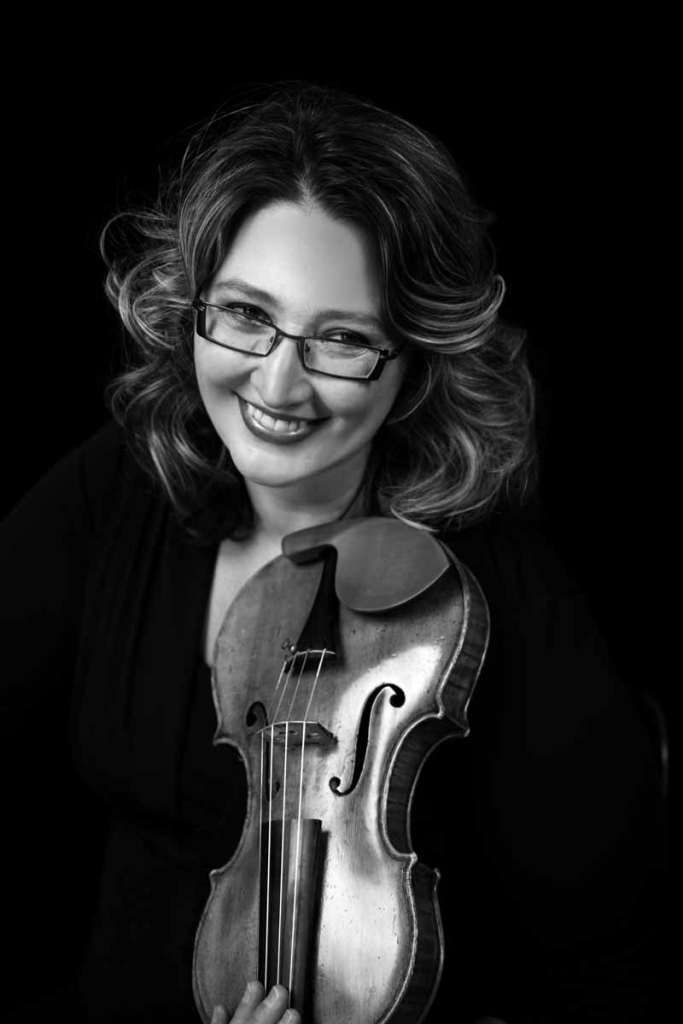
(Pictured: Magisterra Solists violinist and music director, Annette-Barbara Vogel.)
You know that violinist and music director, Annette-Barbara Vogel, is brilliant- but her guest musicians are certainly no slouches!
Anya Alexeyev, born in Moscow into a family of concert pianists, trained at the prestigious Gnessin School and Moscow Tchaikovsky Conservatory before earning a scholarship to the Royal College of Music in London, where she won major prizes. She has appeared as a soloist with leading orchestras, including the Royal Philharmonic, BBC Philharmonic, Moscow State Symphony, St. Petersburg Philharmonic, and Quebec Symphony.
(Pictured: pianist Anya Alexeyev.)
She is a genuine musical explorer who has recorded widely for international labels, yet she is equally passionate about unearthing hidden gems of the piano repertoire. In Magisterra’s trio, she brings the depth of a truly global career together with a restless musical curiosity.
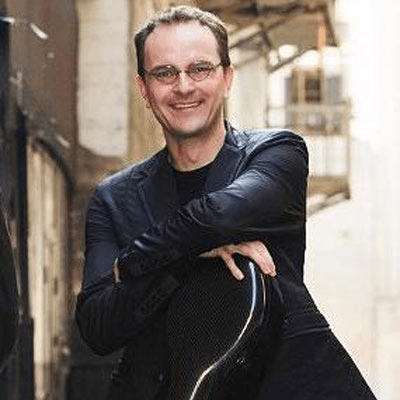
Three things about Belgian cellist Tom Landschoot are especially intriguing for concertgoers: he has an international solo career, is a sought‑after teacher, and he has a deep chamber‑music pedigree.
Landschoot has appeared as a soloist with orchestras across Europe, North and South America, and Asia, including the National Orchestra of Belgium, the Frankfurt Chamber Orchestra, and symphonies from Taiwan to Ecuador, with performances broadcast on radio and television worldwide.
He has held a leading professorship at Arizona State University, is on faculty at elite summer institutions such as Meadowmount, and will join the Cleveland Institute of Music as Professor of Cello in 2026
And … be still my heart … Tom Landschoot has been involved in interdisciplinary public service projects through his music, such as raising funds and awareness for the need of building an orphanage and hospital in Tamil Nadu, India. As part of this humanitarian project, Landschoot was featured in a documentary film of a cellist performing across India, integrating photography, culinary, journalism and original music compositions.
(Pictured: cellist Tom Landschoot.)
And on this day, when wars are beginning yet again, when there is so much to mistrust and fear in our world, let’s be grateful for the wonderful people who bring us music in this chaos
IF YOU GO:
What: Magisterra Soloists present Masterworks featuring the Magisterra Piano Trio.
When: Thursday, March 5, at 7:00pm.
Where: Museum London, 421 Ridout St. North, London, ON.
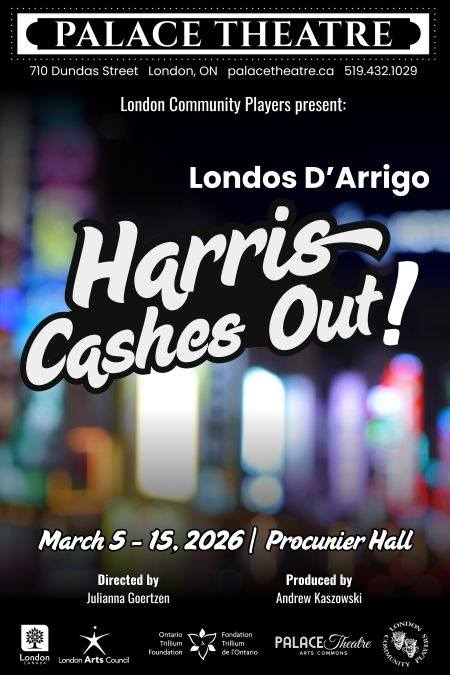
London Community Players’ production of Harris Cashes Out! plays on the Procunier Hall stage at the Palace Theatre from March 5 – 15. Director Julianna Goertzen talks about the production in this Q&A interview with Richard Young.
Q. What is the basic premise of Harris Cashes Out? Could you provide a brief plot synopsis?
Harris Wellborn is an old, washed-up Broadway musical writer who didn’t make much money in theatre. After his wife passed away, he fell into despair, and his sister, Maggie, moved him against his will to Baltimore to be closer to her. She arranged for an eccentric dog walker, Kim, to check on him and his health, but Kim and her boyfriend, Jason, had other plans to take advantage of Harris and his musical writing past. It’s a comedy about relationships and the things that happen when very different people are in proximity to one another.
(Pictured: Harris Cashes Out! Director, Julianna Goertzen. Photo: Ross Davidson.)
Q. The description on the Palace Theatre website indicates that the play has a Broadway theme. Does it include any musical numbers?
The only musical numbers it includes are the little ‘soft-shoe humming’ songs that Harris (played by Tim Bourgard) makes up on stage every performance. You may also recognize famous musical numbers played during the intermission and changes in scenes.
(Pictured: Tim Bourgard as Harris Wellborn. Photo by Ross Davidson.)
Q. Why did you choose the Procunier Hall stage as opposed to the larger Palace Theatre stage?
With a play like Harris Cashes Out!, I believe it would be more appropriate for a smaller venue like Procunier Hall to hold. With only four actors and a simple rundown apartment set, you’re right up close to the action and can hear the quiet, sensitive scenes that you might not catch with a big stage.
Q. Can you tell me about the playwright Londos D’Arrigo? I understand he’s Canadian and from around these parts. What other noteworthy plays has he written?
Londos was born, raised, and currently resides in Toronto. We have the privilege of having him coming to see our production of Harris Cashes Out! and we are very excited. Londos says that Harris Cashes Out! is a favourite of his. Other comedic plays he has written include Spreading it Around, which the London Community Players produced in 2009 at the Palace Theatre. He has also written a play called Vicki’s Back!, which sounds very similar to Harris Cashes Out!, written with a female lead in ‘show biz’.
(Pictured: Playwright Londos D’Arrigo.)
Q. Can you tell me something about yourself in terms of your involvement in community theatre, things such as other plays you have directed, produced or starred in?
I have always been involved in theatre from a young age. Most of my theatrical career was with Aylmer Community Theatre (ACT). In 2007, I started out as a makeup artist and dresser for those quick changes backstage. My acting debut on ACT’s stage was a comedy called Not Now Darling by Ray Cooney and John Chapman, where I played Sue Lawson. I was required to act drunk and walk around in my underwear on stage. Since then, I have been a part of many productions, whether as a stagehand or stage manager. My specific role was not of primary importance; what mattered most was that the cast and crew enjoyed a positive experience while producing the show. I have only directed two one-act shows with ACT in the past, so this is also my first full-length show.
In regard to my London community theatre experience, this is my directorial debut. A year ago, I was on the Palace Theatre stage as Dorothy Foxton in Murdered to Death, a comedy by Peter Gordon; before that, I was Dorothy in Stepping Out by Richard Harris in 2009.
(Pictured: Vivien King-Sherwood as Maggie Bellows. Photo by Ross Davidson.)
Q. What challenges have you encountered bringing this play to the Procunier Hall stage?
I have experienced very few challenges with bringing Harris Cashes Out! to Procunier, although the set and lighting crew may disagree since a set like this hasn’t been built in Procunier Hall for as long as anyone can remember. The biggest challenge about the play is the part of Harris. Harris’ lines amount to 50% of the dialogue. Tim Bourgard, who plays Harris, has been working very hard to recall every word, blocking, prop, and costume piece. The other actors have been very helpful and encouraging to Tim as we make our way through rehearsals.
(Pictured: Sam Didi as Jason Sernach. Photo by Ross Davidson)
Q. Is there anything else you think our readers should know about LCP’s production of Harris Cashes Out!?
This family-friendly show is full of laughs for all ages. Come out and enjoy live theatre up close and personal in Procunier Hall at the Palace Theatre. You won’t regret it.
(Pictured: Kim Sutton as Jasmine Gunkel. Photo by Ross Davidson.)
CAST & CREW: HARRIS CASHES OUT!
Director
Julianna Goertzen
Stage Manager
Alex Goertzen
Producer
Andrew Kaszowski
Assistant Stage Manager
Andrea Stevens
Light Design
Andrew Kaszowski
Sound Design
Alex Goertzen
Costumes
Julianna Goertzen & MJ Walzak
Props
Colin Arthur
Intimacy Coordinator
James Noonan
Set Build Lead
David Long
Harris Wellborn
Tim Bourgard
Maggie Bellows
Vivien King-Sherwood
Kim Sutton
Jasmine Gunkel
Jason Sernach
Sam Didi
IF YOU GO:
What: London Community Players present Harris Cashes Out!
When:Thursday, March 5 – 7:30 pm Friday, March 6 – 7:30 pm Saturday, March 7 – 7:30 pm Sunday, March 8 – 2:00 pm Thursday, March 12 – 7:30 pm Friday, March 13 – 7:30 pm Saturday, March 14 – 2:00 pm Sunday, March 15 – 2:00 pm
If you have a story idea or would like to become a Volunteer Writer for The Beat Magazine, you can reach Richard at richardyoung@thebeatmagazine2025.ca
In a 2023 profile I prepared of well-known London area singer-songwriter and Forest City London Music Awards recipient, Laura Gagnon, she told me, “I’m a road warrior at heart.” Since that story was published, the Port Stanley resident has kept up her busy schedule of live performances in and around London, throughout Canada, and abroad.
I caught up with Laura as she was in the throes of organizing and preparing for The International Women’s Day – Women In Music Showcase, being held at London’s Palasad Social Bowl on Sunday, March 8th.
What follows is an updated Q&A Interview with Laura about her career and the March 8th event. (The Interview has been edited for length and clarity.)
Q. Tell me a little bit about your upbringing. Was yours a musical home?
Very much a musical home! My parents are both professional musicians, and once a week, they’d have band rehearsals at our home in the garage when I was very young. The garage was connected to our kitchen, so you can imagine me singing all the tunes in the kitchen at the top of my lungs while they’re practising. Ha-ha!
Q. Do you remember the moment when you made the decision that music was going to be a big part of your life?
In our previous interview, I talked about Grade 10, but the more I reflect on my life and career, I realize it was much earlier than that. Recently, I discovered old VHS tapes of me singing and playing piano, and I could see how much I loved it. I was shy but determined! My first TV appearance was on “Rogers TV” for the Salvation Army. You can actually watch these on my Instagram account. The glimmer in my eyes really says it all.
Q. Has the piano always been your primary instrument? Do you play any other instruments?
I definitely started with piano, and then singing came not too long afterwards. It gave me the foundation for pitch and how notes worked together. The sound was beautiful to me. I then tried to learn the sax and trumpet, but that didn’t stick. Ha-ha. Then I picked up the drums. I can jam pretty well with musicians but not well enough to play a big show. I’ve recently picked up the flute, so we’ll see how that goes!
Q. What have your musical influences been over the years?
Going way back to when I was eight years old, it started with the Wizard of Oz and “Somewhere Over The Rainbow.” I was enchanted by Judy Garland. It grew into a love for Disney songs. My favourites were Snow White, The Little Mermaid and Beauty and the Beast. Then along came Alicia Keys, who introduced me to soul and a female artist who could play and sing piano. The sassiness of Britney Spears and Christina Aguilera followed, and then the range and sensitive tone of Mariah Carey really started to shape my musical world.
Q. Tell me about the various groups and musicians you have played with since you started playing professionally.
I’ve had the privilege of playing with some pretty exceptional musicians, but also some really amazing groups like the Extreme Tour, based on guiding the lost out of the dark with music. I’ve written with Guess Who Guitarist, Dale Russell (may he rest in peace). An incredible producer, songwriter and human. Gary Martin of the Touring Funk Brothers is another exceptional musician who taught me how to better connect with an audience through just one single note. These three stick out to me because they’ve had an incredible impact on my career.
Q. What types of gigs have you played over the years?
Oh wow! I’ve played festivals like CMW, VENUEXVENUE, World Fest, Ribfest and conferences. I sang the Canadian and American national anthems in France for a tree planting ceremony for the 100th Anniversary of Vimy Ridge. At MMA events, London, ON City Council, Ottawa, ON City Council, baseball games, hockey games, soccer games. Performed in Nashville at Rocket Town for an industry showcase and many songwriter showcases around Canada.
Q. Tell me a little bit about any recordings you have made in your career.
It all started with writing a song for Remembrance Day, “In Our Hearts”. I wrote it based on many veteran ceremonies I’ve sung at. I wanted to give something back to the community that had supported me for so long. Two days before their ceremony, I asked if I could perform “In Our Hearts,” and they said yes, absolutely.
Now, at this point in time, the song hadn’t been recorded yet, and I wanted to see if it was worth diving into, and it was. There was an overwhelming need and feeling to get this song professionally done. I recorded the song at Prevail Media Group, and they brought it to life! Fast forward a year, and I get a message in my Facebook inbox from a woman asking if I have sheet music for the song. I didn’t at that moment, but I quickly wrote a lead sheet for her and sent it off.
I asked her if she could send me clips of her singing group practising and performing it. I also wanted to come see the performance and hear them in person. I asked where they were based, and she said Australia!! Darn, that’s a bit far! Ha-ha!. But I was so honoured that they picked my song to sing for their Remembrance Day ceremony. They found it on YouTube! Thank you, Moss Vale High!
Q. Other than the March 8th International Women’s Day – Women In Music Showcase, what projects are you currently pursuing?
Right now, I’m working on a couple of singles, one to be released in about five weeks called “Blue Eyes”. It’s a soft, stripped-down, cuddle vibes kinda song. The song feels like a warm hug, chicken soup for the soul and the feeling of getting tucked into bed as a kid. I remember that feeling well. I’m really excited for this one and honoured to be working with a really amazing producer, Randy Mead, out of London. After that single, I’ll be releasing another single, then an album.
Q. Is there anything else you think our readers should know about Laura Gagnon, the musician and Laura Gagnon the individual?
Since we last chatted, a lot has changed, and it’s been an amazing adventure and gift. 2025 was a big year for me. I was signed to an indie label, Big Records World (Canadian label), signed to a Management/Booking label, Grace Musicians Management Group (NYC Label), and toured the United States performing and helping the homeless with a group called The Extreme Tour, as I mentioned earlier. I’d like to expand on “The Extreme Tour” because it was the pivotal point of my career. It took me out of business mode and reminded me that I’m an artist and I have a bigger mission than just playing show to show, hoping to increase my followers.
I forgot to connect with my audience and be warm for them, be gentle with myself. I forgot that silliness is okay and actually inspires humans to be themselves. That tour reminded me why I started this career in the first place. I think it’s our job as musicians to help, heal and be kind to those who aren’t kind to themselves. To give them permission to be themselves. When lost, you help them find their way. The amazing part about that is that, in turn, sometimes in helping them, they help you. Selflessness is the key to success. Being YOU and no one else and just showing up. TRUST. I will be going back on tour with this amazing team, but also be touring a string of shows in New York City soon.
—
The Doll House Showcase Presents International Women’s Day –Women IN MusicShowcase
Q. The Facebook post for the event suggests that it has been 10 years since you have done one of these showcases. Why is that? What has motivated you to revive the showcase in 2026?
I organized and ran The Doll House, a showcase for female musicians from 2016 to 2018, which allowed me to play with many amazing female musicians like Sarah Smith, Nikki James, Carly Thomas, and many others. It was all about empowering female musicians and working as a team to accomplish our goals and being there for one another when things got tough.
The past couple of years, I’ve been asked if I’m going to be bringing this showcase back to the city by multiple musicians and showcase goers from the previous years. I thought, as it has been ten years, this would be the perfect time to bring it back.
Q. Do you have any other partners in organizing and staging this event?
I have been doing all the organizing and staging. I’ve done all the marketing, posters, video and picture promo, radio interviews, TV interviews, including setting up the flow of the artists and booking the venue.
Q. Are similar events taking place in other communities?
Yes! It’s quite amazing! Ottawa has two of them, “Girls To The Front” and “Vox Femme”, and Burlington has “Harmonia”. I know of many others, but those are the ones that stick out in my mind. I’ve performed at two of them.
Most of the proceeds are going towards My Sisters Place – a vital London, Ontario charity operated by CMHA Thames Valley that provides a safe, welcoming centre and essential services for women experiencing trauma, mental health challenges, addiction, and homelessness – and the participating musicians. In true Doll House Tradition, there will be a tip jar for all musicians to share. “It’s A Doll House Tradition To Tip The Musician!”
My Sisters Place has the same mission as the Doll House, which is to protect and create awareness of the dangers of one’s surroundings. It advocates for women to speak out and be heard. To work together and heal through music and community. When we first started this event, that was the main purpose, so women in the music scene weren’t alone and could call on each other. It was created as a safe space, like My Sisters Place.
Q. Tell me about the artists who will be performing on March 8th. What genres of music will be represented?
The artists are women who have been busting their butts in the music scene worldwide. They aren’t just local heroes but international inspirations. They come from all walks of life. Some have been with the Showcase from the beginning, and some I have met in the past year. They come from Quebec, Guelph, Port Dover, London, Kincardine, Port Stanley and Toronto. Each musician is pushing boundaries every day to create that safe space for the young musicians coming up. Easy to talk to, open to tell you anything and help you where it’s needed. Sometimes an in confidence ear.
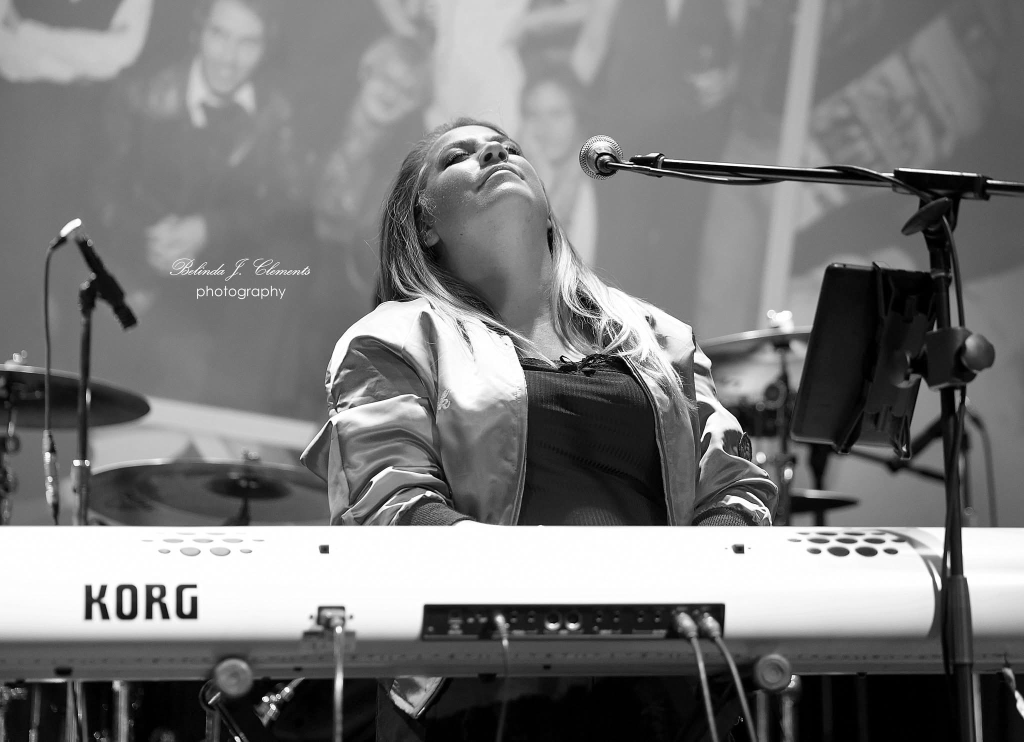
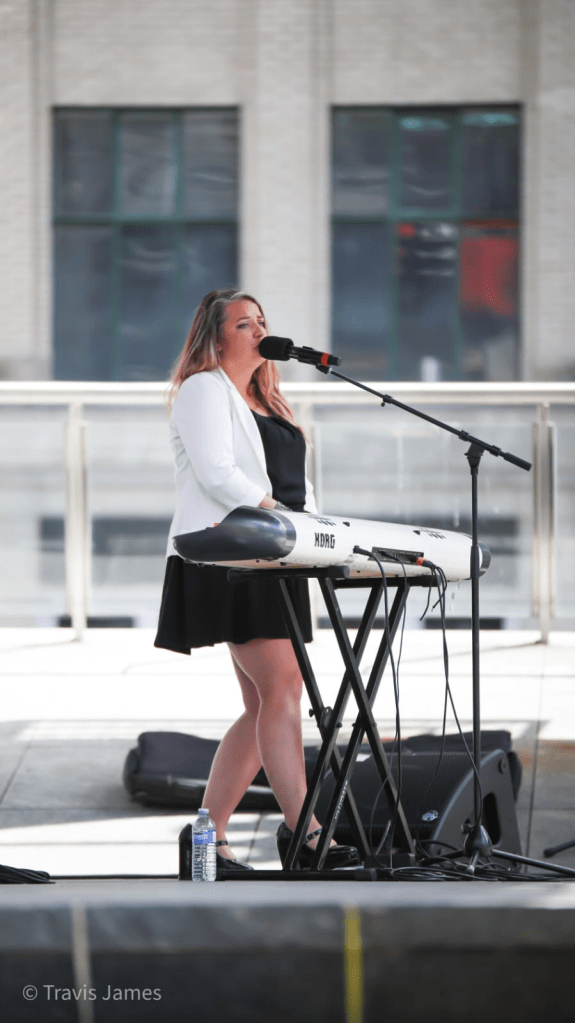
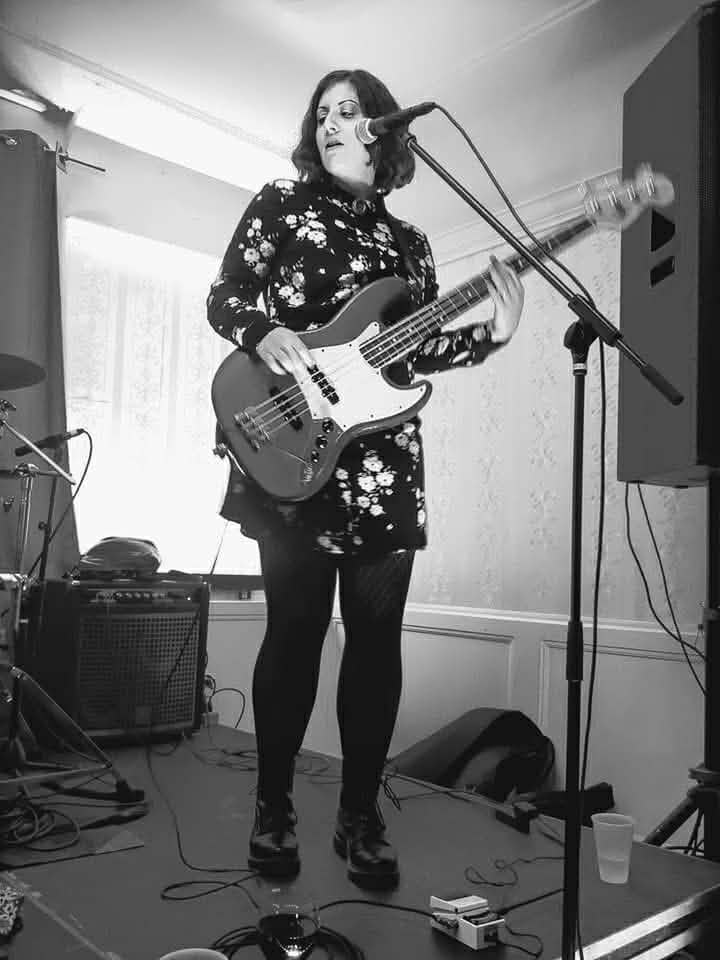
The lineup includes myself, Anne Moniz, Cinzia and the Eclipse, D’eve Archer, Gillian Davies, Angelina MacKinnon, Felicia McMinn, Rachel Dara, Andrea Matchett, and Kate Channer. Musical genres presented will include Pop, Folk, R&B, and Rock. (Editor’s Note: Photos of the participating musicians appear below.)
Q. Where can readers get more information about the individual artists?
Each artist has an Instagram account and a website. They’re all on social media, so they’re easy to find. I urge you to follow them, comment on their pages and tell them what inspired you when you saw them perform.
Q. Do you plan on making this an annual event again?
That’s a great question. I haven’t decided yet. But I think this is a great idea.
Q. Is there anything else you think our readers should know about the March 8th event?
This isn’t just a showcase. These events have always been about networking and connection, storytelling, and just making sure we all get a little bit of love. There will be merch for sale, so please bring cash. That goes directly to the artists. We have an amazing host named TIA G, who is a champion of women owning their energy, advocating for being yourself, and is a bright light in our sometimes very dark community. We are so excited to have her!
IF YOU GO:
What: The Doll House Showcase Presents: International Women’s Day – Women in Music.
When: Sunday, March 8th at 6:00pm.
Where: Palasad Socialbowl, 777 Adelaide Street N., London, ON.
Tickets: $10 cover charge at the Door. An All Ages Event.
Q&A Interview with Laura Gagnon conducted by Richard Young, Publisher & Content Manager of The Beat Magazine 2025.
If you have a story idea or would like to become a Volunteer Writer for The Beat Magazine 2025, you can reach Richard at richardyoung@thebeatmagazine2025.ca
“In an orchestra, the whole is greater than the sum of its parts. Together, we can create something truly extraordinary.” – Yo-Yo Ma
And with the London Community Orchestra, you get COOKIES!!!
No, not the kind you have to accept, reject, or manage, the kind you can share with musicians and audience members at Dundas Street Centre United Church after each concert. Because, as all great musical experiences are, it’s a community event, one in which we are participants, even if we sit on the church benches and applaud our hearts out while some of London’s good people enrich our lives with exquisite music.
WE ALL share in the opportunity to quicken our minds and deepen our emotions.
Yes, this organization has been around for fifty-two years, encouraging talented non-professionals to endow their busy lives with the discipline and rewards of symphonic music. And in those fifty-two years, most of the faces have changed, but the quality of performance has evolved to make every season better than the last.
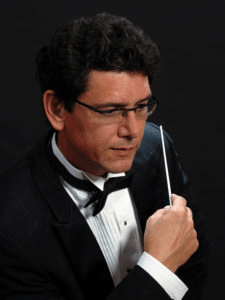
Len Ingrao has conducted LCO since 1998 and has built this city’s large symphonic ensemble to take on artistic challenges and share them graciously with Londoners- for a very reasonable ticket price.
(Pictured: London Community Orchestra Conductor, Len Ingrao,)
I’ll bet you know many of them.
Carolyn Martinelli, who has taught generations of young people at Catholic Central High School, has been a lovely concertmaster since 2005.
(Pictured: Carolyn Martinelli, London Community Orchestra, Concertmaster.)
Steve, who adds fire to the local community orchestra while completing his epidemiology degrees.
Ana, who is a dedicated therapist but still plays her violin in LCO.
Mary, the oboist and member of the FIRST London Youth Symphony over 60 years ago, who still often sets that tuning A for the community orchestra.
Some local music teachers and profs, continuing to aspire and learn with material they love.
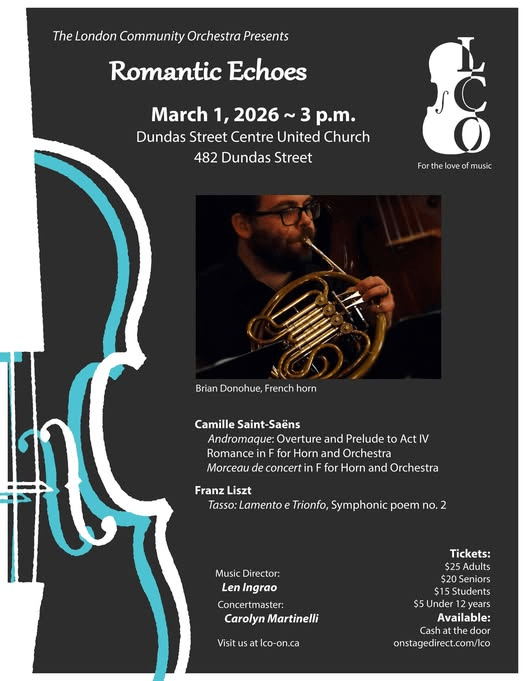
And one of those teachers will be the soloist for the March 1st program – Brian Donohue.
(Pictured: Brian Donohue, London Community Orchestra Soloist.)
Brian is the kind of teacher who does the profession proud:
He’s been a member of LCO for twelve years, while teaching at Sir Frederick Banting High School, conducting bands, starting a French horn choir, and teaching the board’s first Music and Math combo course.
He’s always ready to help other musical ensembles with coaching and standing in when he’s needed- and devotes time to raising his three kids with his wife, Christine.
To keep his musical skills growing, he has long-standing involvement in London community ensembles, including playing French horn with the London Community Orchestra and Encore: The Concert Band.
He has taught private horn through Western University’s New Horizons Band program, which focuses on adult and lifelong learners returning to music—he really believes that music is for everyone.
No, no gold medal in hockey – but he has won the Dawson Memorial Award in Music Education, Western Music Award in his final undergraduate year. Chamber of Commerce Award for excellence in Western’s Wind Ensemble, Kiwanis Music Award (festival recognition).
And he is performing music that he LOVES, from the “easy listening” Camille Saint-Saens.
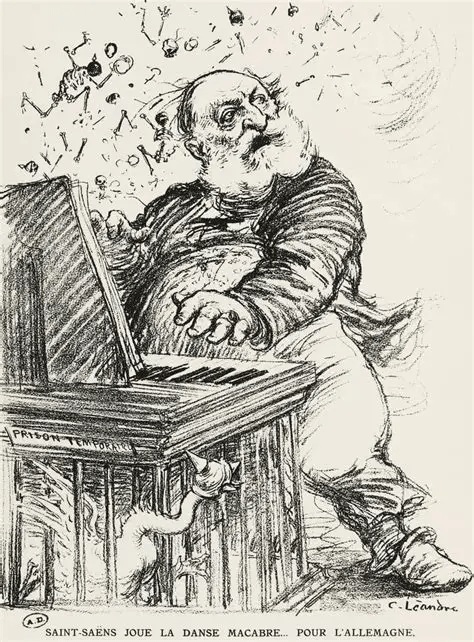
(Pictured: Caricature of Camille Saint-Saens.)
Andromaque: Overture and Prelude to Act IV is a film score before there were films! S-S wrote it in 1902 for Sarah Benrhardt to bring the Trojan War story to life, politics, grief, unwanted suitors – daily stuff in Troy, 17th-century France, and in our current relationship with the US.
And the Morceau de Concert is going to be a showstopper. S-S originally wrote it for a horn that is no more … the “cor omnitonique,” with four pistons that promised to play easily in any key. The gadget did not survive, but the virtuoso showpiece it gives to a great horn player – with lots of dazzling acrobatics – will hold your attention on Sunday.
Speaking of virtuosi, the full orchestra will be giving us Franz Liszt and his Tasso: Lament and Triumph. Liszt was pioneering the symphonic poem by 1849 – telling a story in a single, continuous movement (so no more worries about when to clap!).
(Pictured: Caricature of Franz Liszt.)
The poem is apparently based on the tortured life of Torquato Tasso in the 16th century as he goes through instability in Ferrara, wanders – in a boat, I presume – on the lagoons of Venice, and finally receives recognition in Rome after his death. All of this tumult is conveyed by the constant transforming of a gondolier’s song that Liszt once heard in Venice.
And after the concert? COOKIES and the chance to tell the musicians what generous, inspiring Londoners they are!
IF YOU GO:
What: London Community Orchestra presents Romantic Echoes.
When: Sunday, March 1, at 3:00pm.
Where: Dundas Street Centre United Church, 482 Dundas Street, London, ON.





















































 The Beat Magazine 2025